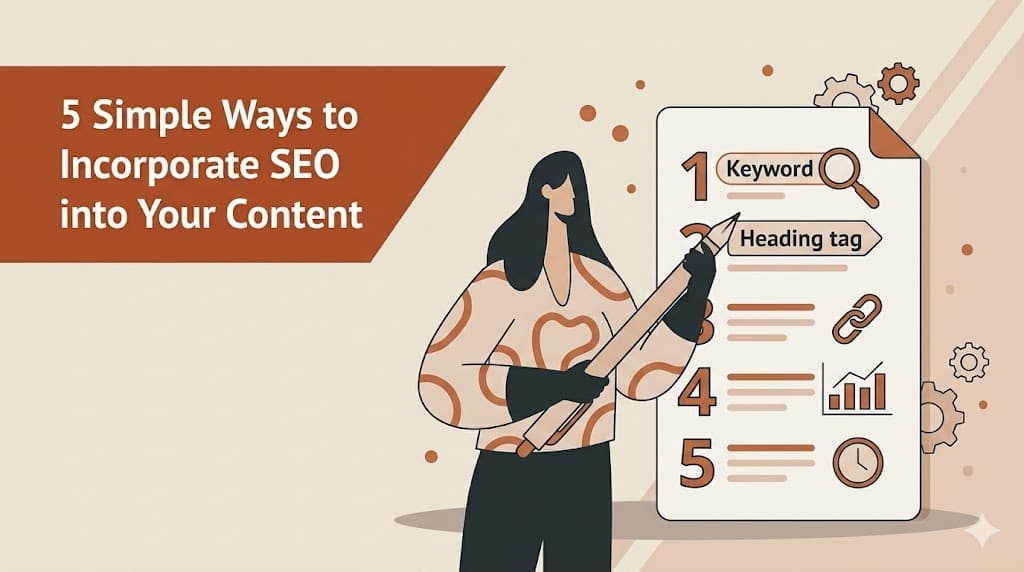
What separates content that earns visibility from content that fades into obscurity? The sources that stand out are intentionally built, grounded in relevance and reinforced by trust. Effective SEO happens when your content meets real audience needs while clearly demonstrating expertise and authority to both search engines and AI chatbots.
Key Takeaways
- Prioritize intent-based keywords by uncovering real audience questions and placing them strategically in titles, headings and supporting copy
- Strengthen topical authority by creating cohesive content around a central topic and linking related pages to signal relevance and depth
- Improve visibility by structuring content clearly with descriptive headings, concise summaries, organized lists and schema markup
- Increase trust signals by earning backlinks through original insights, promoting content where your audience gathers and encouraging shares
- Own your niche with consistent, expert-level content that covers all angles of your focus area
Why SEO Matters for Search and Generative Engines
The rules of search have changed. It's no longer just about showing up on Google. Now, AI platforms like ChatGPT, Perplexity and AI Overviews decide which content gets quoted, summarized and recommended. Developing effective SEO strategies now requires accounting for both traditional search and generative engines.
Insight 1: Use Intent-Driven Keywords to Guide Your SEO Strategy
Every search reflects intent. Whether someone is researching a problem, comparing options or preparing to buy, understanding user intent ensures your content aligns with what your audience actually needs. This is the foundation of effective SEO and discoverability in both search and AI platforms.
- Research audience questions using tools like Google Search Console, ChatGPT and Semrush to uncover real intent behind keywords
- Prioritize keywords that reflect goals, challenges or buying stages rather than focusing solely on volume
- Integrate high-value terms naturally into H1s, title tags, subheadings and supporting copy to strengthen relevance and clarity
Insight 2: Build Thematic Relevance to Establish Topical Authority
Search engines and AI systems reward depth and consistency. Instead of isolated pages, focus on creating a connected content ecosystem around a central topic. This structure signals to algorithms that your brand owns that subject area, improving both rankings and user trust.
- Choose a core theme that reflects your expertise and audience interests
- Create supporting content that explores related questions, subtopics and practical applications
- Use internal links to connect related pages and show coverage depth across your chosen topic
- Refresh and expand existing pages to maintain topical strength over time
Insight 3: Use On-Page Optimization and Structure to Enhance Visibility
Search engines and AI platforms rely on clear organization to understand your content. A well-structured page helps both users and algorithms quickly identify key themes and relationships, improving readability and increasing the likelihood of being featured in search results or AI-generated summaries.
- Implement a clear page structure and heading hierarchy (H1 for the title, H2s for main sections, H3s for supporting ideas)
- Add summaries, lists and FAQs to make your content scannable and easy to digest
- Implement schema markup such as FAQ, Article or How-To to help search engines interpret your content more effectively
- Focus on clarity and flow to keep readers engaged and encourage longer time on page
Insight 4: Strengthen SEO Through Backlinks and Engagement Signals
Search engines and AI chatbots rely on trust signals to determine which content deserves visibility. Backlinks, brand mentions and user engagement all contribute to your site's authority and influence how often your content appears in both search results and generative AI responses.
- Publish content that others want to reference — original research, expert commentary or visuals that simplify complex topics
- Contribute byline articles, press releases or co-created content with industry experts to gain quality mentions from credible publications
- Promote content in newsletters, on LinkedIn and within professional communities where your audience already interacts
- High-quality PR coverage now plays a key role in both SEO and GEO performance — publishing on high-AI Domain Impact Index (AIDII) domains increases the chance your brand will be cited in AI-generated responses
Insight 5: Build B2B Topical Authority by Owning Your Niche
You do not need to dominate every keyword. Spreading content too thin can dilute authority. Concentrate on your niche by consistently publishing expert-level, high-value content that explores all dimensions of your area of focus. This helps search engines and AI platforms view your brand as a go-to resource.
- Identify your most valuable niche by aligning audience needs with your unique expertise
- Create deep, evergreen content that explores various angles — a strong content cluster has a clear main page supported by multiple related pieces
- Keep content fresh through regular updates and link between related resources to reinforce authority
- Maintain consistent voice and expertise to help users and algorithms associate your brand with leadership in that space
Insight 6: Future-Proof Your Content With Generative Engine Optimization (GEO)
Search is shifting rapidly as AI-powered tools change how people find and engage with information. To stay visible, your content needs to be optimized for both traditional SEO and Generative Engine Optimization (GEO). A well-considered SEO and GEO strategy now powers full-funnel discoverability.
- Anticipate the questions your audience asks AI tools and craft concise, accurate answers that reflect expertise
- Use structured data and clear headings to help AI discover your content's context — schema markup is especially powerful here
- Prioritize transparency, original perspectives and verified information to position your content as a reliable source
- Stay informed about updates to AI search and adjust your strategy to reflect new patterns in discovery and ranking
To Sum It Up
By applying these six SEO content insights, you can turn optimization into a natural part of your creative process. Effective SEO begins with understanding audience intent and shaping content that delivers clarity, depth and value. When every element aligns with a clear goal, your content builds the potential to increase visibility and credibility — with target audiences, search engines and AI.