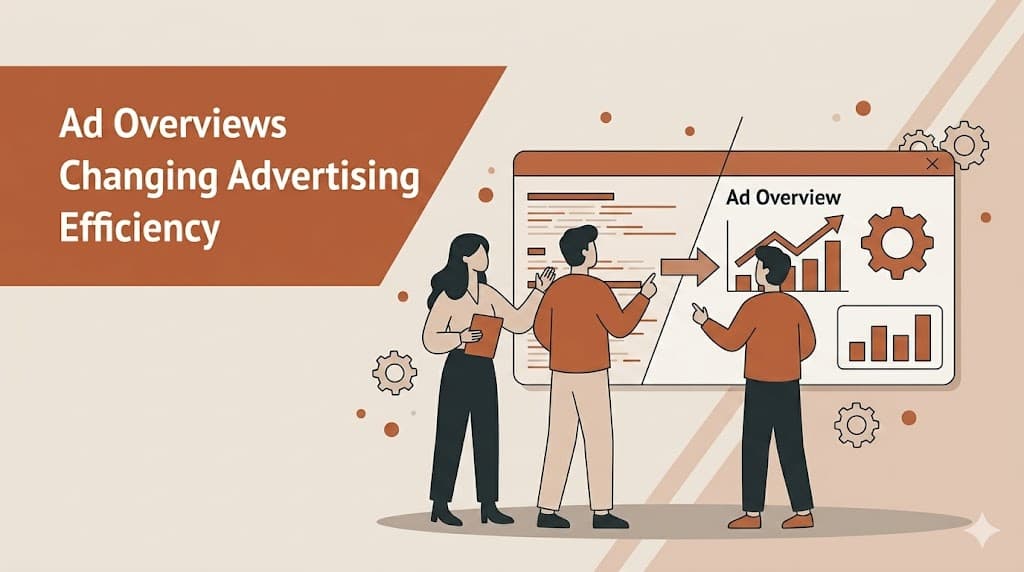
AI Overviews are fundamentally altering paid search dynamics by threatening conventional visibility while creating fresh efficiency opportunities for adaptable marketers. As adoption grows, advertisers observe measurable performance shifts driven by changing buyer behavior. Though paid search remains relevant, its operational mechanics and performance expectations have evolved considerably.
Key Takeaways for B2B Advertisers
- Paid ads appear lower on the page — AI Overviews now dominate SERP positions, fundamentally reshaping visibility and user click behavior
- CTR is declining, especially mid-funnel — AI-generated responses increasingly satisfy user intent before clicks occur
- Efficiency can improve despite fewer clicks — AI filters out low-intent traffic, leaving more qualified users
- Each click carries more weight — ad messaging and landing page performance matter more than ever
- Success metrics must evolve — conversion rate, cost per lead and pipeline impact matter more than raw volume
How AI Overviews Are Changing the SERP
Search engines like Google continue displaying paid listings, yet they now appear outside AI-generated responses and frequently much further down the page. As AI Overviews increasingly sit above both organic and paid results, they fundamentally alter how users scan results, which links appear credible and how rapidly decisions unfold.
Paid search now competes with a highly visible, highly trusted answer engine that typically resolves user intent before scrolling occurs.
CTR Is Declining, But That Doesn't Mean Lower Performance
As AI Overviews increasingly answer informational and exploratory queries directly on the SERP, click-through rates are declining — particularly for mid-funnel keywords. Recent analyses of B2B paid search accounts indicate advertisers have witnessed CTR decline by approximately 61% on queries where AI Overviews fully satisfy user intent before clicking becomes necessary.
What's actually happening is a quality filter. Users who would have clicked from curiosity or bounced quickly are being screened out earlier. The users who actually click are further along in their decision-making process. In multiple B2B campaigns, lower click volume has coincided with stronger conversion efficiency after spend was reallocated away from AI-satisfied keywords and toward solution-aware, branded and competitor terms.
AI Overviews are removing noise from the funnel. Instead of paying for early-stage clicks that rarely convert, advertisers are paying for fewer, but more intentional, visits.
How Paid Search Strategy Should Adapt
To stay competitive in an AI-driven search environment, paid media teams must rethink strategy and success metrics. That typically means:
- Shifting KPIs toward qualified traffic, conversion rate, cost per lead, pipeline contribution and ROAS
- Reducing spend on low-intent keywords consistently satisfied by AI Overviews
- Prioritizing bottom-of-funnel, branded, competitor and solution-aware search terms
Aligning With Right Search Intent
When users now click on a paid ad, they're often further along in their decision-making process. That puts greater pressure on post-click experiences. To capitalize on higher-intent traffic:
- Craft ad messaging that aligns with decision-stage intent — consider fewer headlines and a sharper focus on value props
- Prioritize conversion rate optimization — audit landing pages for clarity, relevance and friction points
What AI Overviews Mean for Advertising Efficiency
AI Overviews are reshaping paid search economics. Visibility and volume may decline, but efficiency often improves as low-intent traffic is filtered out earlier. For B2B advertisers, this reinforces a long-standing truth: the goal isn't more clicks, it's better ones. Paid search isn't becoming less important. It's becoming more precise, more accountable and more closely tied to business outcomes.