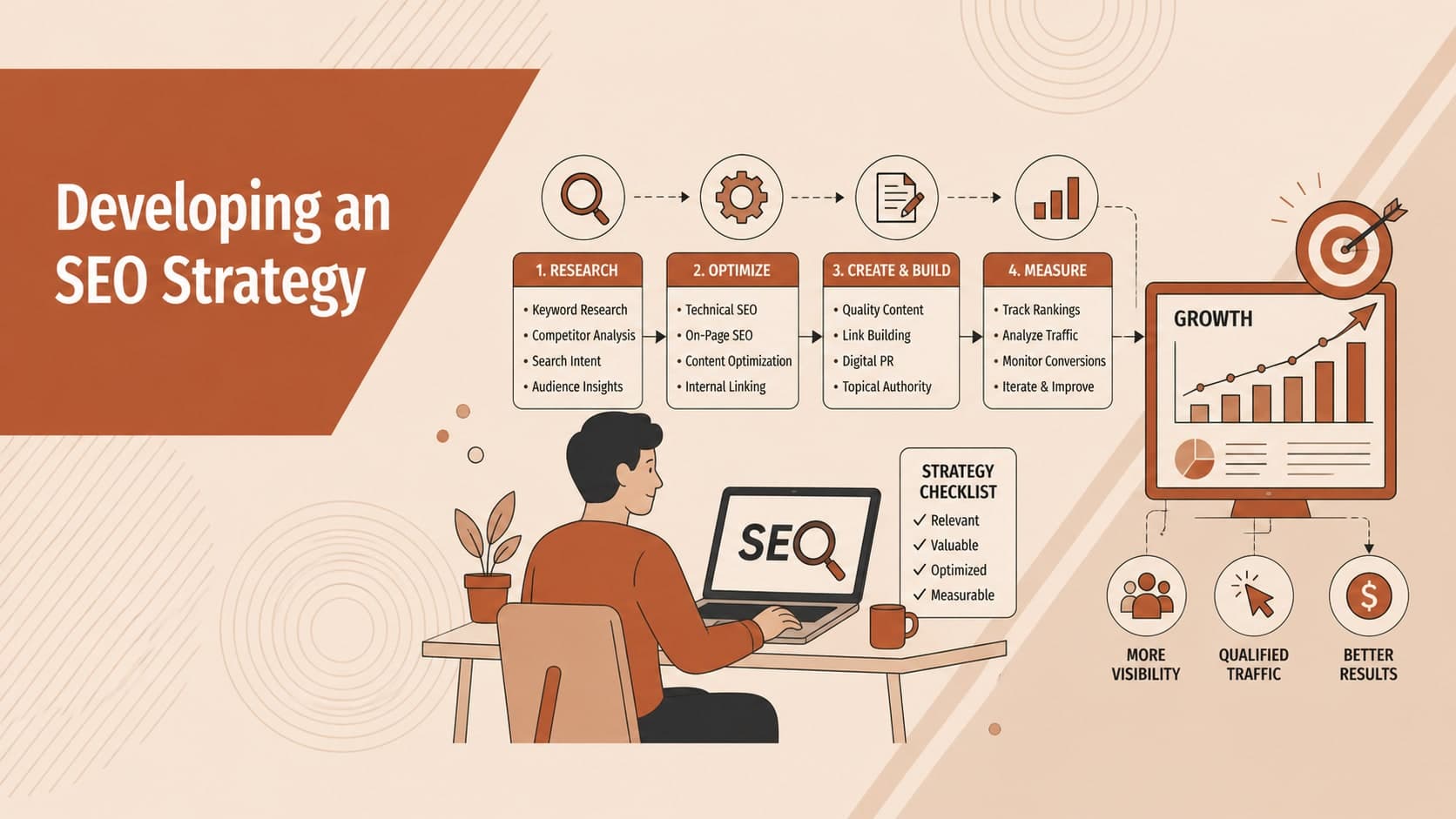
When approaching SEO optimization, it can feel overwhelming to know where to begin. Kubnal Bridge uses a time-tested, eleven-layer methodology for B2B SEO strategy development.
Editor's Note: In addition to traditional SEO, B2B marketers should also consider Generative Engine Optimization (GEO) as a complementary approach to ensure your brand appears in AI-powered search results.
What is an SEO Strategy?
An SEO strategy is a plan to improve a website's visibility in search engine results pages (SERPs). It encompasses on-page optimization, off-page strategies like backlinks, and technical elements including site speed and indexing.
SEO Fundamentals: the Building Blocks
The layered approach means foundational steps create the base while advanced tactics build upon this structure for a comprehensive SEO strategy.
11 SEO Building Blocks for Success
1. Establish KPIs
Common SEO KPIs include organic traffic, search rankings, keyword visibility, share of voice, topic authority, click-through rates, lead generation, and user engagement time.
2. Website Configuration
Foundational setup includes branded domain, HTTPS protocol, mobile-responsiveness, XML sitemaps, robots.txt files, and submission to search engines. Requires technical SEO audits to ensure crawlability and address performance issues.
3. SEO Keyword Research & Targeting
Emphasizes identifying search phrases matching user intent (navigational, informational, transactional). AI-influenced search shifts like Google AI Overviews and conversational queries are changing the keyword landscape. Use tools like Semrush for competitive keyword analysis.
4. Competitor Gap Analysis
Analyzes competitors' high-ranking keywords, content strategies, and backlink profiles to identify visibility gaps. Recommends using tools for ongoing competitive assessment.
5. Content Refreshes and New Content Development
Content refreshing updates outdated information, optimizes keyword relevance, and aligns with user intent. Recommends using Google Search Console to identify high-impression, low-click pages and adding FAQ sections for AI-driven visibility.
6. On-Page SEO Factors
Optimize HTML titles, meta descriptions, header tags, robots.txt instructions, canonicals, and hreflang tags. Focus on natural keyword usage, internal links, image alt tags, embedded videos, structured data, and HTML hierarchy.
7. Conversion Rate Optimization (CRO)
CRO optimizes design, layout, and user experience to encourage desired actions (form completion, newsletter signup, asset downloads). Key elements include expectation matching, clear CTAs, mobile optimization, navigation, social proof, and form optimization.
8. Information Architecture
Information Architecture defines website structure and hierarchy. Internal links function as "joints" guiding search engines and users. Core elements include navigation, XML sitemaps, category pages, footer links, breadcrumbs, and URL paths.
9. Discovery & Building Awareness
Techniques include content syndication, XML sitemaps, link-building, optimization for generative AI engines (Bing, ChatGPT, Google, Perplexity), social media, influencer partnerships, voice search, and featured snippets.
10. Accelerators
Accelerate through managing link equity, expanding keyword research, and leveraging AI tools. Focus on high-quality backlinks via guest posts and digital PR, social media amplification, influencer partnerships, and brand citations.
11. Measure & Refine
Measure performance using Google Analytics 4 with machine learning and advanced tracking. Monitor user behavior, conduct regular keyword research, and collect organic search attribution data from CRM and marketing automation platforms.
SEO Implementation Plan
Set Clear Objectives
Convert KPIs into SMART goals (specific, measurable, achievable, relevant, time-bound) by setting measurable metrics, defining baselines, and assigning ownership to team members.
Prioritize Based On Current State Analysis
Address high-priority fixes first through quick wins (metadata updates), technical issue resolution, and competitive gap optimization.
Implement Improvements in Foundational Blocks
- Technical SEO
- Content Optimizations
- New Content Creation
- Information Architecture
Monitor Progress and Iterate
- Set up real-time performance dashboards using GA4, Looker Studio, and Semrush
- Conduct monthly or bi-weekly data reviews
- Refine tactics based on insights and algorithm updates
- Perform quarterly or bi-annual technical health checks
Final Thoughts
The structured implementation approach consistently delivers results for our clients, driving growth in organic traffic and inbound leads. It emphasizes foundational best practices, modern tactics, and AI tool integration for long-term success.