
Ranking #1 used to mean you'd won. Not anymore. In 2026, AI Overviews appear on roughly 48% of Google searches, and 83% of the queries that trigger them end without a single click (Semrush zero-click study, 2025). Your page can sit at the top of the results and still get ignored, because the answer now lives above the links.
That gap is why two disciplines now run side by side. Search engine optimization (SEO) gets you found in a list. Generative engine optimization (GEO) gets you featured inside an AI-written answer. This guide breaks down how they differ, where they overlap, and how to split your effort so you win both.
Key Takeaways
- SEO optimizes for rankings and clicks; GEO optimizes for citations inside AI answers from ChatGPT, Perplexity, and Google AI Overviews.
- AI Overviews cut top-page click-through rate by 58% in 2025 (Ahrefs, 2025), but pages cited in an Overview earn 35% more organic clicks (Seer Interactive, 2025).
- GEO doesn't replace SEO. It layers on top. Build the SEO foundation first, then optimize for extraction.
What Is the Difference Between SEO and GEO?
The difference is simple: SEO competes for a position, GEO competes for a sentence. SEO optimizes your pages to rank in a list of blue links so users click through. GEO optimizes your content so generative engines quote or cite it inside a synthesized answer. One earns the click; the other earns the mention, even when no click follows.
That distinction matters more every quarter. As of early 2026, 37% of consumers say they now start a search with an AI tool instead of Google or Bing (Search Engine Land, 2026). When an AI assistant answers directly, there's often no results page to rank in at all. So the question shifts from "Are we ranking?" to "Are we being said?"
Does that mean clicks no longer matter? Hardly. Most transactions, sign-ups, and conversions still happen after someone lands on your site. The point is that visibility now has two front doors, and they reward different behavior.
SEO vs GEO at a Glance
Here's the fastest way to hold both in your head. SEO is measured in positions and clicks; GEO is measured in mentions and citations. The table below maps the six dimensions that matter most, drawn from how the leading 2026 comparison guides frame the split.
| Dimension | SEO | GEO |
|---|---|---|
| Goal | Rank higher, earn the click | Get cited in the AI answer |
| Surface | SERP list of links | Synthesized AI response |
| Unit of success | Position (#1 to #10) | Presence (mentioned or not) |
| What it rewards | Keywords, backlinks, page experience | Structured, fact-dense, authoritative passages |
| How you measure it | Rankings, CTR, organic traffic | Citation share, brand mentions, AI referrals |
| Discovery path | Rank, click, convert | Be the source, get cited, build recognition |
Notice the last row. SEO assumes a click is the moment of truth. GEO assumes the mention is, because an AI assistant might recommend you to a buyer who never visits your homepage until they're ready to purchase. That's a different funnel, and it needs different content.
What Is Search Engine Optimization (SEO)?
SEO is the practice of optimizing web pages to rank higher in traditional search results so people click through to your site. It rests on three pillars: on-page (content and keywords), technical (crawling, indexing, speed), and off-page (backlinks and authority). Google still processes vastly more searches than any AI tool, which is why SEO remains the larger traffic channel in 2026.

How does ranking actually work? Google weighs relevance, authority, and experience signals, then orders the results. Win those signals and you climb. But the catch in 2026 is that climbing buys you less than it used to, because the AI Overview often sits above your #1 spot and answers the question first.
The Overview isn't a fringe feature, either. It now surfaces on close to half of all Google searches, reshaping what "page one" even means. The link is still there; it just gets seen less.
What Is Generative Engine Optimization (GEO)?
GEO is the practice of optimizing content so generative AI engines cite, quote, or reference it inside their answers. The target surfaces are ChatGPT, Perplexity, Google's AI Overviews, Gemini, and Microsoft Copilot. Instead of competing for a ranking slot, you're competing to be one of the handful of sources the model trusts enough to name.

Why does this deserve its own discipline now? Because the audience is exploding. ChatGPT reached roughly 900 million weekly active users by February 2026, more than double its 400 million a year earlier (ALM Corp, 2026). Perplexity crossed 45 million monthly users over the same stretch (DemandSage, 2026). That's a search behavior shift you can't ignore.
What content GEO rewards
The first peer-reviewed research on the topic settled a lot of debate. A study from Princeton, Georgia Tech, the Allen Institute for AI, and IIT Delhi found that GEO methods can lift a page's visibility in AI answers by up to 40%, and the three most effective tactics were citing sources, adding quotations, and adding statistics (Princeton GEO study, 2024). Definition paragraphs, FAQs, numbered steps, and expert quotes with credentials all help too.
SEO vs GEO: What's the Same?
More than the headlines suggest. Both disciplines reward genuinely good content, clear structure, and demonstrated authority. The foundation you build for one largely serves the other. The Princeton finding that GEO's top tactics are "compatible with existing SEO best practices" is the tell: you're not starting over.
Four things carry across both worlds. They satisfy real user intent rather than chase keywords. They demand quality content a human actually wants. They rely on clean structure (descriptive headings, semantic HTML) that both crawlers and language models can parse. And they need ongoing audits, because neither ranking nor citation is a set-and-forget win.
Our take
Teams that already do SEO well are roughly 70% of the way to GEO. The remaining 30% is reformatting for extraction: shorter answer-first passages, more sourced statistics, clearer entity signals. Not a wholesale rebuild.
So if SEO and GEO share a foundation, why do so many brands treat them as rivals? Usually because the measurement differs so sharply that it feels like a different game. We'll get to that.
How Do You Optimize for GEO Differently Than SEO?
The single biggest shift is writing for extraction, not just ranking. An AI engine lifts a passage out of your page and drops it into an answer, so each passage has to make sense on its own. Lead with the answer in the first sentence, then support it. A page built as one long narrative ranks fine but gets quoted rarely.
Beyond that, four tactics move the needle on citations:
- Pack in verifiable facts. Statistics, dates, and named sources give models something concrete to cite. That's the exact behavior the Princeton study rewarded.
- Sharpen entity and authority signals. Author credentials,
sameAslinks, and structured data help models trust who's talking. - Spread your presence. Digital PR and mentions on sources AI already trusts raise the odds you're pulled into an answer.
- Stay crawlable to AI. Confirm your
robots.txtand anyllms.txtallow the assistants you care about.
Here's the uncomfortable part: ranking #1 doesn't guarantee any of this. AI engines synthesize from sources they judge credible, and that set often differs from Google's top ten. In our experience, we've seen pages that rank on page two get cited more often than the #1 result, simply because they answer the precise sub-question in a clean, self-contained block.
Should You Choose SEO or GEO?
You don't choose. You sequence. Build the SEO and content foundation first, then layer GEO tactics on top, because GEO's best practices depend on the same quality and structure that SEO demands. The real decision is how to split effort, and that depends on your business model.
When is SEO the clear priority? For transactional and local intent, e-commerce, and high-click-value queries where the click is the conversion. When does GEO matter most? For informational and research-heavy journeys, especially B2B consideration, where buyers ask an assistant before they ever talk to you. The chart below shows how we'd allocate effort by business type, a split we've calibrated from where each model's buyers actually start their research, not a one-size-fits-all ratio.
A quick rule of thumb: if your buyers research with an AI assistant before they buy, start investing in GEO now. Don't wait for the click data to dry up first.
How Do You Measure SEO vs GEO Success?
SEO success is counted in clicks; GEO success is counted in mentions you may never get a click from. For SEO you track rankings, impressions, CTR, organic traffic, and conversions in Google Search Console and GA4. For GEO you track citation frequency, brand-mention share, AI referral traffic, and your "share of AI voice" across assistants.
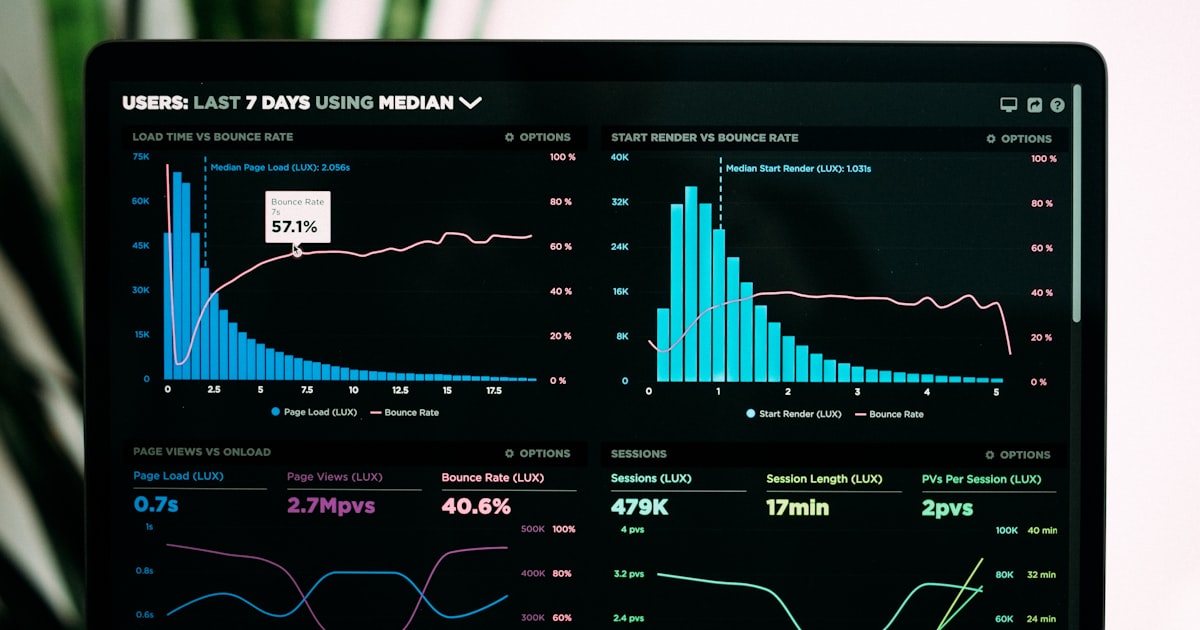
Why can't you just reuse SEO metrics? Because the zero-click reality breaks them. Only about 1% of users click a link inside an AI Overview (Pew Research, 2025), so a citation can drive brand awareness and downstream demand without ever showing up as a session. If you judge GEO purely on referral traffic, you'll undervalue it badly.
The practical fix is to run both scorecards in parallel and connect them. A page cited in AI answers often lifts branded search later, so watch branded query volume and direct traffic as lagging indicators of GEO working.
Ready to Win Both Surfaces?
If your content ranks but rarely gets cited, you're leaving half your visibility on the table. Run a GEO readiness audit on your top 10 pages: check whether each one opens with a self-contained answer, carries sourced statistics, and stays accessible to AI crawlers. Fix those three things first. They're the fastest path from "ranking" to "being said."
Frequently Asked Questions
Is GEO replacing SEO?
No. GEO is the next layer on top of SEO, not a replacement. Both run in parallel in 2026, and the Princeton GEO study confirmed its top tactics are compatible with SEO best practices (Princeton, 2024). SEO wins the click; GEO wins the citation. You need both.
Can I do GEO without doing SEO first?
Technically yes, but it's a weak strategy. GEO relies on the same content quality, structure, and crawlability that SEO requires, so a shaky foundation undermines your citation odds. Since AI Overviews appear on roughly 48% of searches (Semrush, 2026), the surfaces overlap heavily, so build both together.
Which AI engines does GEO target?
GEO targets the generative engines people use to get answers: ChatGPT (around 900 million weekly users in 2026), Perplexity, Google AI Overviews, Google Gemini, and Microsoft Copilot (ALM Corp, 2026). Each synthesizes responses from sources it judges credible rather than listing ranked links.
Does ranking #1 on Google guarantee AI citations?
No. AI engines build answers from sources they deem trustworthy, and that set often differs from Google's top results. Being cited in an AI Overview earns 35% more organic clicks than not being cited (Seer Interactive, 2025). The citation, not the rank, is the new prize.
How is GEO success measured if there are no clicks?
Through brand mentions, citation frequency, AI referral traffic, and share of AI voice rather than position and CTR. Only about 1% of users click links inside AI Overviews (Pew Research, 2025), so citations build awareness and branded demand that show up as lagging indicators, not direct sessions.
Conclusion
SEO and GEO aren't rivals. They're two doors into the same house. Here's what to hold onto:
- SEO wins clicks; GEO wins mentions. With AI Overviews on 48% of searches and 83% of those ending click-free, you need both doors open.
- The foundation is shared. Quality, structure, and authority feed ranking and citation, so good SEO is most of the GEO battle.
- Sequence your investment. Build the SEO base, then reformat for extraction: answer-first passages, sourced stats, clear entity signals.
Start with one move this week: rewrite your top page's opening into a self-contained, sourced answer, then check whether AI assistants begin citing it.
Sources
- Ahrefs, AI Overviews Reduce Clicks by 58% (update), retrieved 2026-05-26, ahrefs.com
- Seer Interactive, AIO Impact on Google CTR: September 2025 Update, retrieved 2026-05-26, seerinteractive.com
- Semrush, AI Overviews Study: What 2025 SEO Data Tells Us About Google's Search Shift, retrieved 2026-05-26, semrush.com
- Pew Research Center, Google Users Are Less Likely to Click on Links When an AI Summary Appears, July 2025, retrieved 2026-05-26, pewresearch.org
- Aggarwal et al. (Princeton, Georgia Tech, Allen Institute for AI, IIT Delhi), GEO: Generative Engine Optimization, KDD 2024, retrieved 2026-05-26, arxiv.org
- ALM Corp, ChatGPT Reaches 900 Million Weekly Active Users, February 2026, retrieved 2026-05-26, almcorp.com
- DemandSage, Perplexity AI Statistics 2026, retrieved 2026-05-26, demandsage.com
- Search Engine Land, 37% of consumers start searches with AI instead of Google, 2026, retrieved 2026-05-26, searchengineland.com