
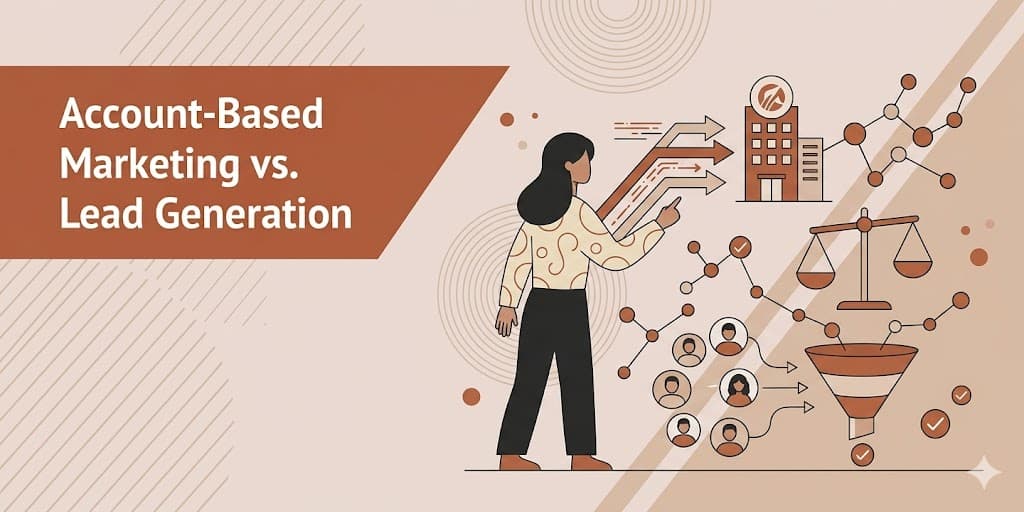
In B2B marketing, two prominent pipeline-growth strategies exist: account-based marketing (ABM) and lead generation. While these approaches often appear together in demand generation discussions, they represent fundamentally different methodologies. Understanding their distinctions helps organizations select the approach that aligns with their business outcomes.
What Is Lead Generation?
Lead generation emphasizes volume through broad audience targeting. This strategy captures prospect attention and converts interest into actionable contacts, typically via content downloads, form submissions, or demo requests. Deployed in the upper or middle funnel, lead generation builds qualified contact databases for nurturing through email, paid campaigns, and related tactics.
Common Lead Generation Tactics
- Content Marketing — content syndication and partner email campaigns with industry publications promote gated assets like whitepapers and case studies
- Paid Search — keyword-focused strategy directing users to dedicated landing pages for demos or downloads
- Webinars — educational events gated behind form fills, generating leads with higher intent than standard gated content
- Social Media Lead Gen — LinkedIn and similar platforms offer native lead capture tools for event registration and demo signups
- Native Landing Pages — website-based pages optimized for content downloads or contact form conversions
- Referral Programs — encouraging customer advocacy through incentivized referrals
What Is Account-Based Marketing (ABM)?
ABM represents precision targeting compared to lead generation's broad approach. This strategic methodology aligns sales and marketing around curated high-value account lists, with campaigns tailored to specific organizational needs, personas, and challenges. ABM incorporates lead generation tools but emphasizes personalization, insight, and multi-channel orchestration, driving deeper engagement and higher close rates.
Common ABM Tactics
- Content Syndication (Targeted) — focused syndication delivering relevant assets to priority accounts
- Webinars and Roundtables — curated smaller events fostering dialogue with key decision-makers
- Personalized Email Campaigns — outbound campaigns featuring custom messaging, relevant pain points, and business-specific use cases
- Account-Specific Ads — platforms like Demandbase, Terminus, StackAdapt, and 6sense enable account-level targeting across display, audio, and CTV
- Customized Content — tailored blogs, one-pagers, and landing pages aligned to account funnel position and specific problems
- Direct Mail — physical packages creating memorable mid-to-late funnel touchpoints
- LinkedIn Conversation Ads — personalized inbox messages initiating engagement leading to form fills, demos, or registrations
When to Use ABM vs. Lead Gen
Choose Lead Generation When:
- Targeting broad audiences or emerging verticals
- Product is lower-cost or easily understood
- Need rapid top-funnel filling
- Launching new products or campaigns with broad appeal
Choose Account-Based Marketing When:
- Possessing well-defined high-value account lists
- Solutions are complex, high-ticket, or require multiple decision-makers
- Seeking expansion within existing accounts
- Sales and marketing align on account strategy
Why a Balanced Strategy Matters
While ABM excels through design specificity, it operates within narrow parameters. Lead generation maintains broader market visibility. Not every qualified buyer appears on current radar lists, and personnel transition between roles. A dual approach builds brand awareness, sustains funnel momentum, and drives sustainable growth.