Cybersecurity especially demands bespoke demand generation strategies given market competition and audience complexity. Effective demand generation can differentiate brands and build robust sales pipelines, but foundational strategy elements must be solid first.
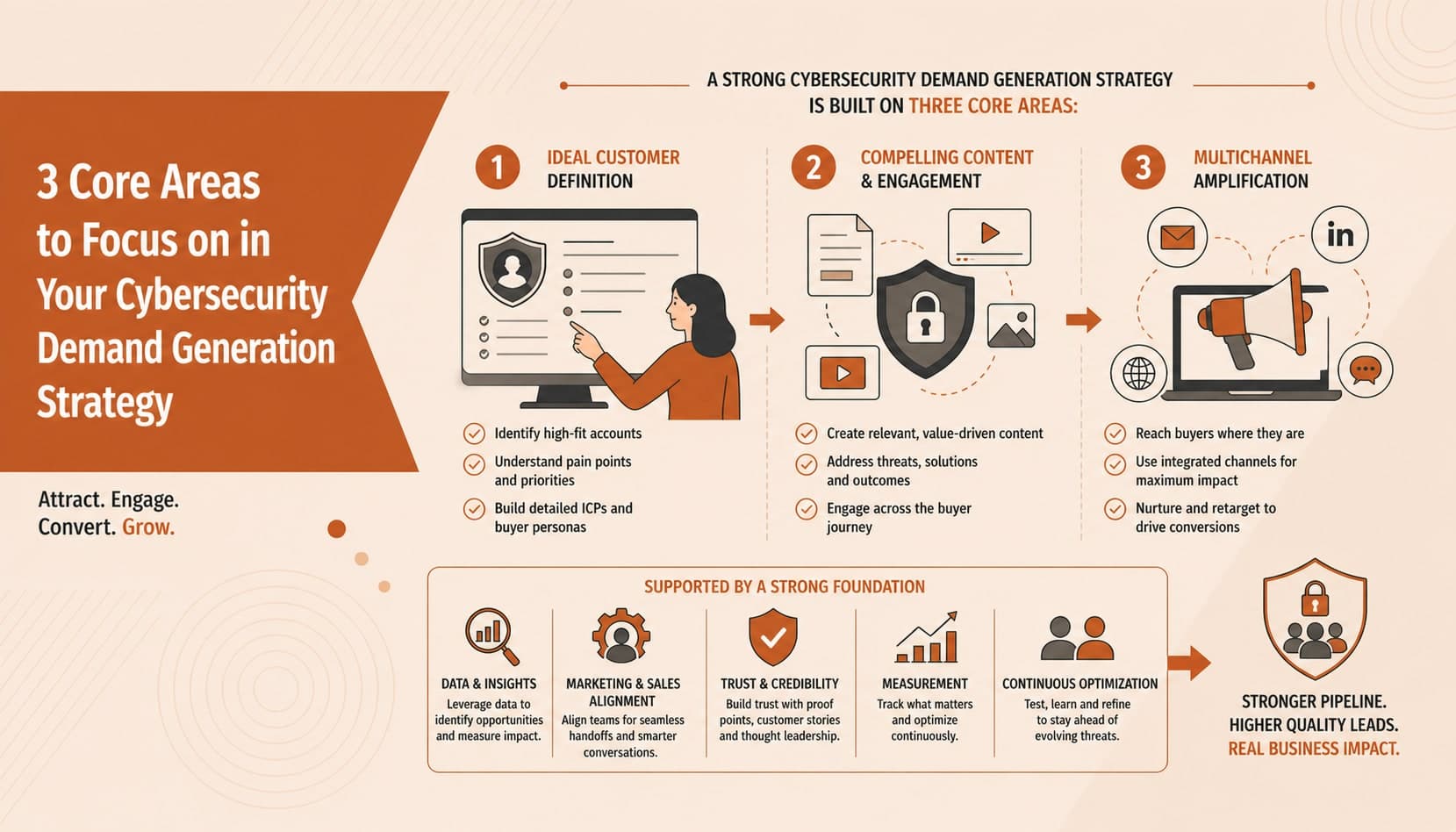
1. Identify the right audience
Personas are particularly critical in cybersecurity marketing. Organizations must distinguish between C-suite decision-makers (CIOs, CISOs) and technical stakeholders (network architects, engineers), as each requires different targeting approaches. Key targeting parameters include company industry, job titles, seniority level, and company size.
Understanding target industries matters significantly. Financial services organizations may require longer nurture cycles before adopting cloud-based vendors. Refined targeting improves advertising budget management — precise audience definition across demand-gen platforms increases chances of reaching appropriate prospects.
2. Know where to reach them
Research competitor advertising strategies first. Analyze which platforms competitors use, their ad types, engagement rates, messaging, and keyword bidding strategies. "Understanding the competitive landscape is fundamental in the cybersecurity space — ongoing competitive research will help you stay relevant. If your competitor is in a specific keyword space, your audience is probably in that space, too."
Business objectives guide platform selection — awareness goals may favor LinkedIn with its diverse creative ad types, while conversion goals might prioritize Google Ads. Build initial audiences within platforms to verify audience presence, and use tools like Google Keyword Planner or Semrush to assess keyword search volume.
3. Craft a relevant message
Focus messaging on target audience perspectives and pain points rather than promotional language. Different organizational roles have distinct pain points requiring tailored messaging — managers respond to product uses and outcomes, while C-suite audiences prioritize business outcomes. "Keep the messaging simple and clear. Cybersecurity is a complex space that is constantly changing. You want to make sure the message you are communicating appeals to those who might not know all of the industry jargon."
Key messaging differentiators
- Competitive and industry gaps — identify issues with current solutions and demonstrate how your company solves them
- Superior customer support — reliable service motivates selection when technical specs are comparable
- Ease of adoption and integration — streamlined solutions appeal to leaders managing complex systems
- Compliance — industries like healthcare, government, and finance prioritize compliance; showcasing regulatory expertise demonstrates long-term partnership value
- Credibility — awards, partnerships, and associations build positive impressions during prospect research
- Testimonials and case studies — real-world examples help prospects envision implementation
Research from 6sense indicates B2B buyers delay sales engagement until approximately 70% through their research phase. Position cybersecurity brands through top- and middle-of-funnel content nurturing prospects via white papers, eBooks, blogs, and webinars demonstrating industry leadership.