

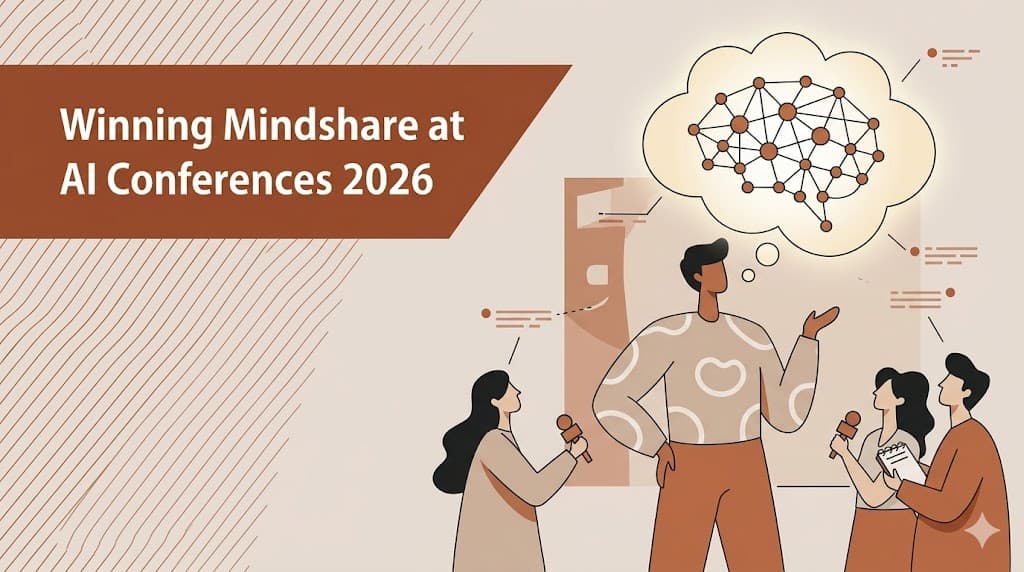
The novelty of AI has worn off. In 2026, it's embedded in nearly every business. Companies aren't just experimenting with AI — they want to be recognized for leading with it. At the same time, generative AI is reshaping how buyers research, evaluate and engage with vendors. The result? Companies are competing to be heard in an increasingly crowded and skeptical market, with fewer opportunities for meaningful, human connection.
Visibility alone isn't enough anymore. What brands need to win is mindshare — a clear, credible story that audiences, buyers and the media actually remember.
The Challenge: AI Fatigue and Shrinking Attention
AI has become the dominant narrative across nearly every industry. As a result, journalists and buyers are overwhelmed by stories that sound the same. A flood of undifferentiated AI messaging has led to growing fatigue, skepticism and fewer chances to make a meaningful impression. With most AI initiatives failing to deliver measurable ROI and trust in AI companies declining, vague or hype-driven stories no longer resonate.
Why Events Matter More Than Ever
In this environment, events remain one of the most powerful tools for building credibility. They create space for real, human connection that cuts through noise and shapes perception. Events allow brands to:
- Establish authority through strong points of view
- Build trust face-to-face
- Demonstrate value in tangible ways
- Accelerate sales conversations
This is especially true in AI, where reporters and analysts are increasingly doing their most meaningful work on the show floor, not from press releases.
How to Stand Out at AI Conferences
Across hundreds of submissions, sponsorships and onsite experiences at HumanX, three levers consistently make the difference between standout brands and forgettable ones.
1. Create Stronger Speaker Submissions
HumanX takes a highly curated approach to programming — there's no pay-to-play, no paid speaking slots and no traditional keynotes. Sessions are moderated by top-tier journalists and designed to be concise, interactive and action-oriented. The most common misstep is treating a submission like a sales pitch. A good rule of thumb: if it wouldn't work as a media pitch, it likely won't work on stage.
Strong submissions are audience-first, clearly aligned to event themes and focused on real industry challenges. With "95% of AI initiatives failing to deliver ROI," organizers and audiences want to hear from the 5% that do.
2. Build Brand Activations That Drive ROI and Visibility
Events are too expensive to treat as awareness-only plays. Experiential, story-driven activations move beyond booths to create memorability, increase engagement and extend visibility through PR and social. Defining success upfront — whether it's meetings booked, pipeline influenced or share of voice — turns events into a measurable growth channel.
3. Maximize On-Site Media Opportunities
Media ROI is often the hardest part of events to measure, which makes a clear PR strategy essential. To make the most of the opportunity:
- Review the media list early and expand through research on past coverage, on-stage topics and social conversations
- Outreach should be individualized and focused on relevance, not volume
- On-site, be helpful rather than promotional — share insights on emerging trends or offer context positioning spokespeople as resources
- Extend momentum after the event through thoughtful follow-up and content
Final Takeaway
The AI landscape is only getting more competitive. But with the right narrative, the right on-site strategy and the right moments of connection, events can be one of the most effective tools for building visibility and credibility. When preparation, narrative and proactive engagement align, on-site media moments turn into lasting visibility.