

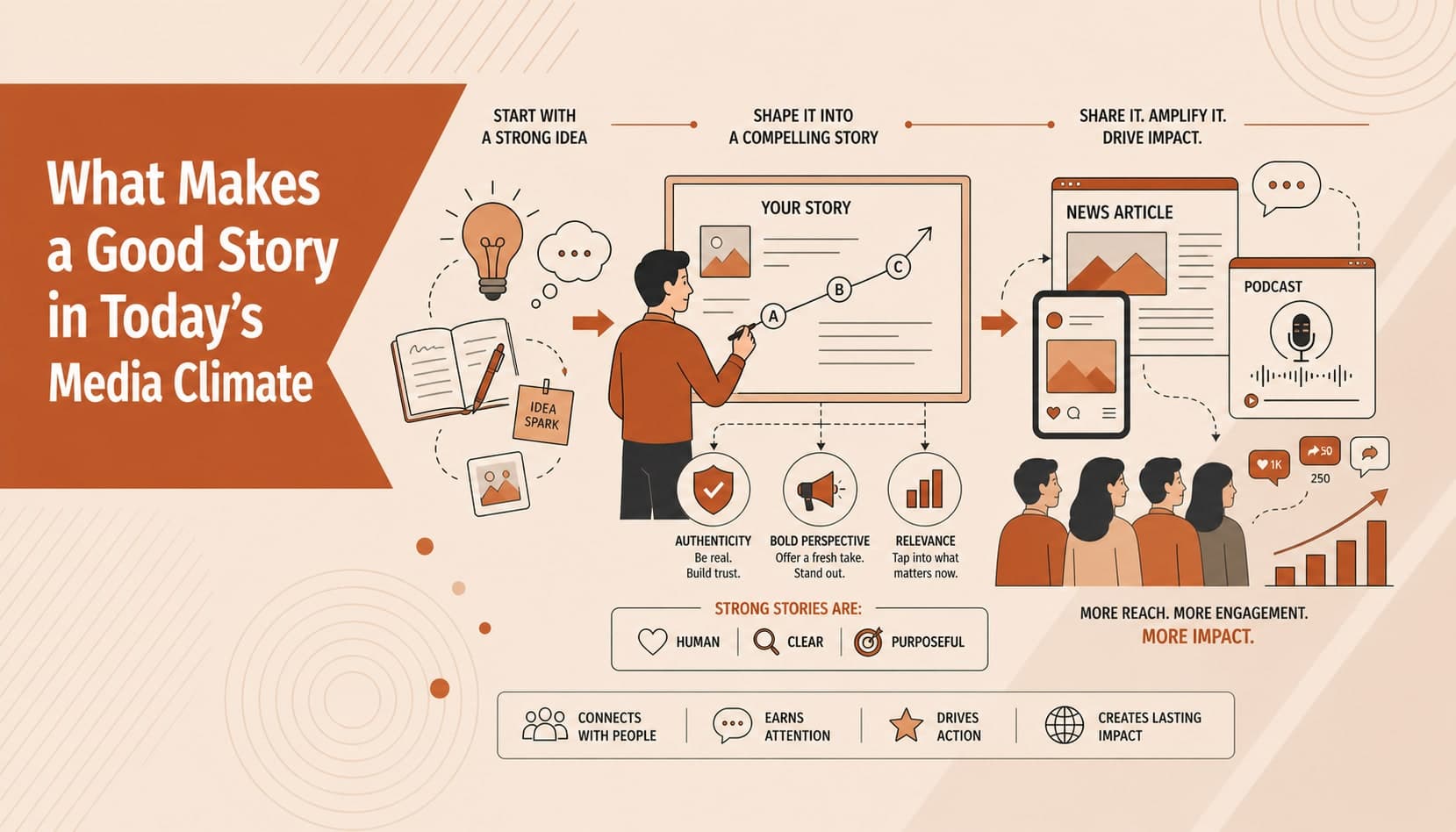
Standing out in today's media environment has become increasingly difficult. Journalists receive hundreds of pitches daily, with only a select few gaining traction. The differentiator is no longer just having strong offerings — it's how the story gets told.
Successful narratives must incorporate three critical elements: authenticity, boldness, and relevance to ongoing industry discussions.
Authenticity is the foundation of a great story
Modern audiences quickly identify insincere messaging. Both media outlets and the general public have grown weary of overly polished language and generic statements. They seek genuine human connection — something relatable and transparent.
Effective authenticity-building approaches include aligning executive messaging consistently, showcasing real customer success stories, and demonstrating tangible impact.
Active participation in industry conversations strengthens authenticity further. Understanding what audiences discuss and what challenges customers face, then addressing these topics directly, increases narrative relevance and journalistic appeal.
Don't shy away from boldness
Many brands hesitate to take strong positions, yet boldness resonates in contemporary media climates. Audiences appreciate viewpoints and fresh perspectives, even when slightly unconventional.
Companies should stake their claims by expressing perspectives that generate discussion. Rather than generic statements about innovation, demonstrate how operations disrupt traditional models with evidence-backed perspectives. This differentiation enhances authenticity while challenging industry status quo.
Ground your story in current conversations
Impactful narratives exist within larger industry dialogues rather than isolation. Many brands miss this by crafting stories about products independently.
Anchor stories to broader industry trends. For technology companies, this might involve connecting narratives to conversations about AI, security, or sustainability. Providing unique insights on trending topics positions brands as field leaders.
A company using AI for workplace efficiency, for example, can align its narrative with broader discussions about the future of work and productivity. Client success stories, tangible results, and supporting data strengthen credibility.
The takeaway: Tell a story that matters
Securing media coverage remains challenging but achievable. Success requires combining authenticity, boldness, and relevance while humanizing audience connections — crafting narratives that resonate within today's fast-paced, media-saturated environment.