
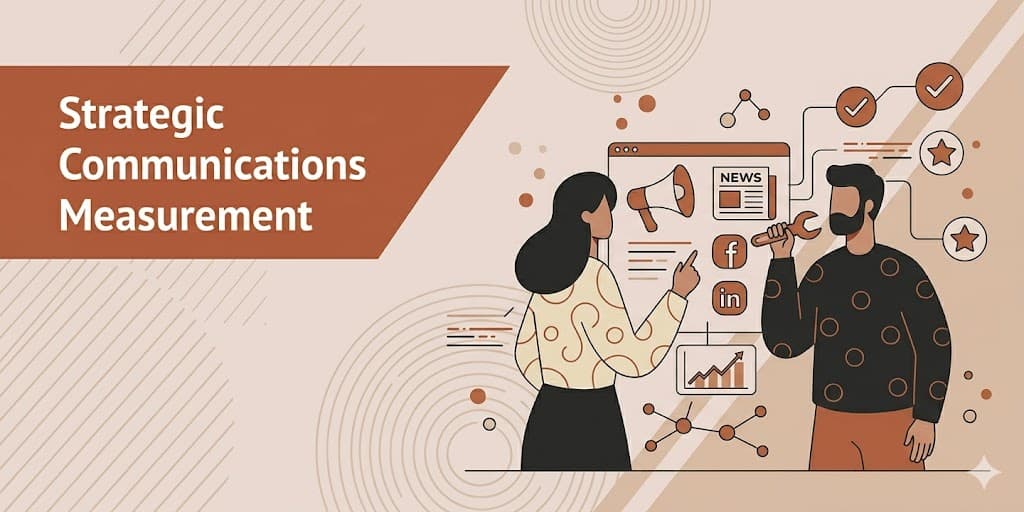
Measurement in strategic communications has historically been undervalued, treated as an afterthought rather than a core business function. That approach is no longer sufficient in today's complex marketing environment. The author argues that measurement isn't black and white — it's contextual, and the strongest frameworks are built from business objectives outward rather than from tactics upward.
Key Takeaways
- Measurement should connect to business goals like awareness and conversion rather than focusing solely on outputs
- Metrics gain value only when tied to the right audiences and meaningful business impact
- Integrated measurement across PR, social, content, SEO and paid channels provides clearer insights
- Continuous optimization transforms reporting into a growth engine
How Strategic Communications Measurement Is Evolving
Key drivers of change include:
- Increasingly fragmented media landscape with nontraditional channels reshaping where audiences discover information
- LLMs changing brand discovery and visibility through GenAI platform citations
- Expectation that marketing leaders connect awareness, influence and conversion
- Higher pressure to prove ROI in uncertain markets
- Communications now operating as an integrated function rather than an isolated silo
What Does Strategic Comms Really Look Like?
Modern strategic communications encompasses far more than traditional coverage, including podcasts, award wins, executive social media, analyst engagement, sponsored content, speaking opportunities and online communities. The critical distinction is between outputs (media placements, impressions) and outcomes (message delivery, decision-maker reach, action driven). Context is everything — measurement should reflect the strategy, not distract from it.
How Kubnal Bridge Measures Strategic Communications
Kubnal Bridge's approach rests on three core pillars:
- Strategic Alignment — programs map to business outcomes from the start, working backward from goals rather than forward from tactics
- Insightful Reporting — reporting explains what metrics mean rather than simply tracking what happened; the company examines message pull-through, publication citation rankings in GenAI platforms, backlink quality, narrative share, domain authority and social amplification
- Continuous Optimization — measurement serves as a learning tool informing future strategy, not a static report
Deeper analysis reveals context behind the numbers: ten media placements might seem successful, but contextual analysis reveals seven reached target decision-makers, three included product links driving traffic, and two appeared in competitor-untouched publications — representing genuine business impact.
Unlock Full-Funnel Measurement
The outcome-based measurement philosophy extends to full-funnel integration across PR, social, content, SEO and paid channels. Two modern methods include Generative Engine Optimization (GEO), designed to drive and track strategic influence through GenAI platforms, and the AI Domain Impact Index, which tracks how brands appear across artificial intelligence systems.
"Measurement isn't the end of the story. It's how we help you write what comes next."