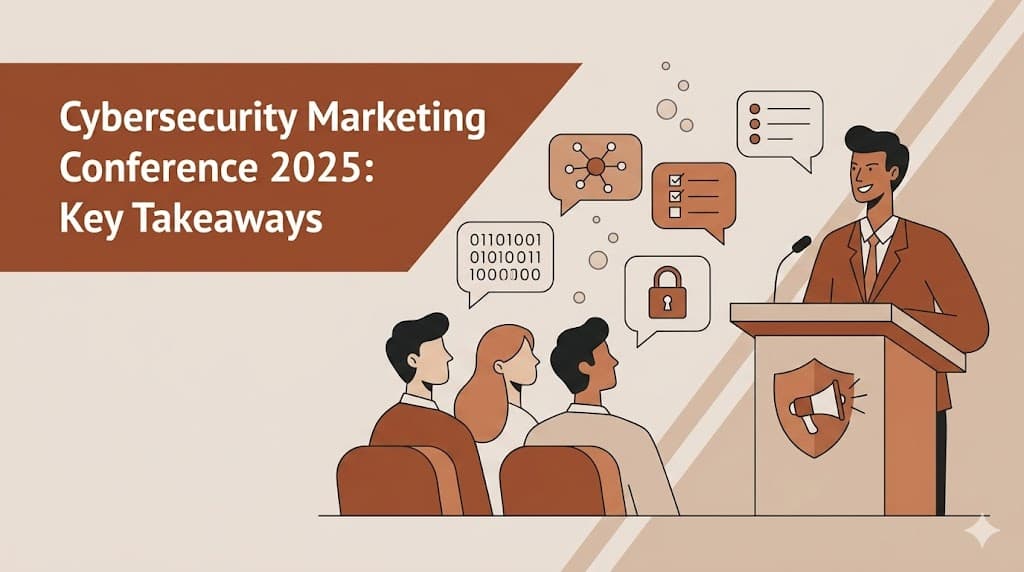
The Cybersecurity Marketing Conference in Austin brought together hundreds of industry marketers. While AI dominated discussions, one overarching insight emerged: in cybersecurity, trust isn't just a differentiator — it's the entire game. Though AI powers products and campaigns, the human elements of credibility, clarity, and connection ultimately influence buyer decisions.
Key Takeaways
- AI can amplify messaging, yet trust determines resonance with cybersecurity buyers who value credibility and clarity
- Brands simplifying complexity and demonstrating relevance outperform those relying on flashy features or generic pitches
- High-touch, data-driven cybersecurity marketing programs secure larger budget allocations and pipeline value
1. AI Is No Longer the Advantage for Cybersecurity. Trust Is.
AI has become an expected component in security solutions and marketing execution, embedded in segmentation and scoring processes. However, as AI claims proliferate, buyer skepticism rises correspondingly. Successful security brands prioritize transparency and credible voices while avoiding over-automation, understanding that integrity remains essential.
2. Security Buyers Are Burned Out. Relevance Wins.
Security practitioners face significant fatigue from inbox overload, constant threat alerts, and organizational pressure. Rather than entertaining "clever" messaging or catchy taglines, these buyers demand clarity. Campaigns emphasizing complex technical narratives frequently underperform compared to messaging that simplifies complexity and addresses specific buyer contexts directly.
3. Human-First, Data-Proven Engagement Is Gaining Budget Share
Top-performing cybersecurity programs combine hands-on, human-centered approaches with data infrastructure proving measurable impact. Budget allocation is shifting toward:
- Targeted in-person events and executive dinners
- Product demonstrations and hands-on trials
- Peer-led webinars and podcasts
- RevOps and attribution tools connecting activity to pipeline
4. Cybersecurity GTM: What Smart Marketers Are Doing Differently
Leading brands are restructuring their go-to-market strategies through these adjustments:
- AI should accelerate, not automate trust — organizations leverage AI for insights and execution while allowing human narratives and expert perspectives to drive strategy
- Go deep, not wide — targeted, audience-specific content outperforms broad-based campaigns, with regional and vertical initiatives gaining traction
- Build credibility through others — analyst validation, media coverage, and peer references carry more weight than self-promotion
- Prove your impact — CMOs face mounting pressure linking brand activities to pipeline and revenue; trust functions as a measurable asset when properly tracked
Final Thoughts: The GTM Edge in Cybersecurity Is Accountability
While AI represents baseline expectations, genuine growth emerges from go-to-market engines rooted in trust, relevance, and measurable results. Winning cybersecurity brands feel authentically human, deliver clear contextual value, and connect brand investments directly to business outcomes. Human-centered approaches paired with accountability mechanisms ultimately distinguish market leaders from competitors.