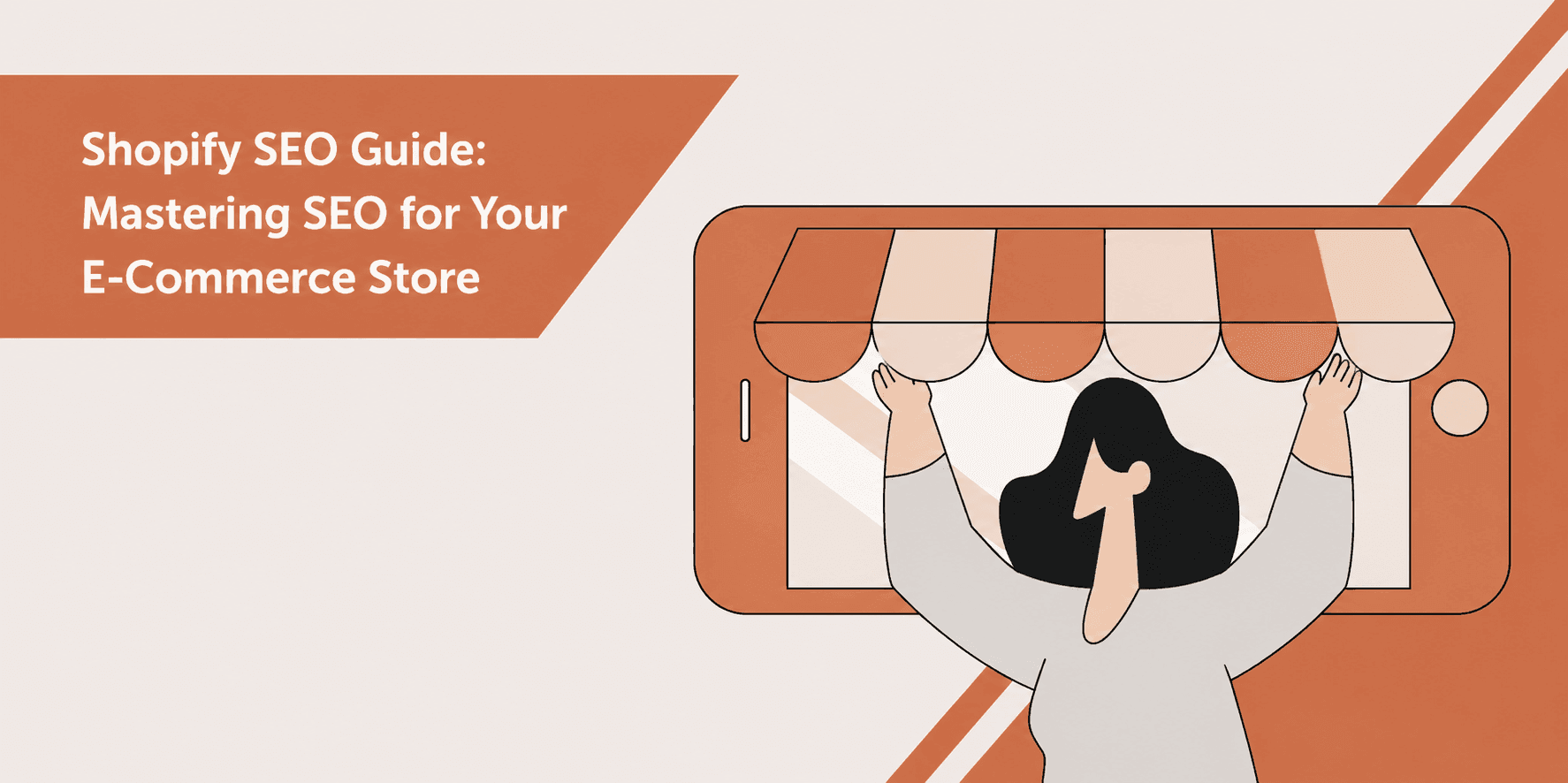
Shopify is one of the world's leading e-commerce platforms, powering 1.75 million businesses globally with over 5.6 million online stores. Despite its popularity, many store owners underutilize SEO — missing out on the 44% of online shoppers who begin their journey through search engines.
Why SEO Matters for Shopify Stores
Google processes 63,000 searches every second. 44% of users begin online shopping through search engines and 37.5% of e-commerce website traffic originates from organic search. SEO enhances brand authority, demonstrating reliability and expertise that converts browsers into buyers.
- 1.75 million businesses globally use Shopify with 5.6 million online stores
- 44% of users begin online shopping through search engines
- 37.5% of e-commerce website traffic originates from organic search
- Page authority signals reliability, relevance, and value to web users
Information Architecture: Setting Up Category Hierarchy
Effective category hierarchy improves both user experience and search visibility. Your category system should reflect how customers think about your products, not just how you organize your inventory.
Using Keyword Research to Optimize Category Names
Keyword research identifies suitable terms for product and category page optimization. Using the right keywords on your site helps rank ahead of competitors. Creating niche subcategories generates additional ranking opportunities — for example, a pet product site should organize specifically: sterilized dog food, senior dog food, diet dog food — rather than a single broad "dog food" category.
Internal Linking Strategy
Google's algorithm follows links when ranking content. Relevant internal links increase visibility by helping users discover related content. Internal links should match user intent — dog food pages linking to wet or sterilized dog food, not cat food.
- Main menu links to primary product/category pages signal importance to Google
- Product-to-blog linking addresses missing subcategories with detailed information
- Avoid excessive linking which decreases visibility and confuses users
- Use Screaming Frog or Sitebulb to detect broken links and analyze internal linking structure
Technical SEO for Shopify
Technical issues are among the most common reasons Shopify stores fail to rank despite good content. Address these systematically.
Robots.txt and Sitemap.xml
Shopify automatically generates updated sitemap.xml files containing product links, images, pages, and blog posts. The robots.txt file is available and customizable. Verify your sitemap at yourdomain.com/sitemap.xml and robots.txt at yourdomain.com/robots.txt.
Duplicate Content
Google struggles to determine original pages when duplicates exist, decreasing visibility and traffic. Shopify commonly creates duplicate URLs through product variants, collection filters, and pagination. Use canonical tags to indicate the original version, and detection tools like Siteliner, Copyscape, or Screaming Frog to audit at scale.
SEO-Friendly URLs
SEO-friendly URLs accurately describe page content using relevant keywords. Shorter URLs typically rank better. To edit URLs in Shopify: go to Admin > click page > Edit Website SEO > modify URL in the "URL and Handle" section.
Page Speed Optimization
25% of users abandon a website that takes more than four seconds to fully load. One-second delays reduce conversions by 4.42% per second. Core Web Vitals are direct Google ranking factors:
- LCP (Largest Contentful Paint): Target under 2.5 seconds for visible content to appear
- FID (First Input Delay): Target under 100ms for system response after user interaction
- CLS (Cumulative Layout Shift): Minimize unexpected layout changes during page load
- Test your store with Google PageSpeed Insights and Test My Site
Image Optimization
Images comprise nearly 75% of webpage weight. Content with images receives 94% more views.
- Use brief, explicit image file names with relevant keywords
- Optimize alt attributes with keywords for both accessibility and SEO
- Choose appropriate formats: JPEG for photos, PNG for transparency, WebP for best compression
- 20% of Google traffic comes from image search — optimized images drive real visitors
- Use Shopify's built-in CDN for fast global delivery; consider lazy loading apps for image-heavy stores
On-Page SEO for Shopify
On-page SEO optimizes individual pages to improve organic rankings and user experience through high-quality content with relevant headlines, meta descriptions, and proper HTML structure.
Title Tags and Meta Descriptions
Title tags define web pages and are crucial for SEO, helping search engines and users understand content. Effective titles require keyword research, appropriate length (50–60 characters), and uniqueness for every page. To change homepage title and description: Shopify Admin > Online Store > Preferences.
Alt Tags for Images
Alt tags describe images for both accessibility (screen readers) and SEO (Google vision algorithms). Avoid keyword stuffing; include useful, descriptive information with relevant keywords. Given that 20% of Google traffic is for images, optimized alt tags drive measurable traffic.
Rich Snippets
Rich snippets provide additional information in search results — ratings, reviews, prices. While not direct ranking factors, they significantly increase click-through rates. Top Shopify rich snippet apps: Schema Plus for SEO, JSON-LD for SEO, SEOKart.
Content Marketing for Shopify
Content marketing creates and distributes relevant, consistent content to attract and retain a target audience. For Shopify stores, blogging is the most accessible and cost-effective channel.
- Keep blogs updated — search engines rank fresh content higher
- Use internal links from blog posts to product and category pages to drive conversions
- Focus on keywords that connect to your products — answering customer questions that lead to your catalog
- Use eye-catching images and maintain a consistent visual design
- Show empathy by sharing relevant stories and brand vision
Link Building for Shopify
Link building constructs backlinks — links from other websites to yours. These are crucial for search ranking as links determine webpage relevance and authority.
- Editorial/Natural Backlinks: Other sites link because your content is genuinely relevant and valuable
- Outreach/Manual Backlinks: You request links through relationship-building and content promotion
- Competitor Backlink Analysis: Find competitor backlinks using SEMrush or Ahrefs and target the same sources
- Popular tools: Ahrefs, BuzzStream, JustReachOut, Moz Link Explorer
International SEO and Hreflang for Shopify
Shopify serves retailers from approximately 175 countries. Hreflang is an HTML attribute for multi-language websites — it tells Google the geographical targeting and language of each page, enabling the search engine to serve the most appropriate version to each user.
- X-default tags specify default pages for users when other language variants are not appropriate
- Validate hreflang implementation using Sitebulb or Screaming Frog
- Ensure all hreflang variations link back to each other to form a complete cluster
- Use IP redirects to direct users to localized website versions automatically
Migrating to Shopify Without Losing SEO Traffic
Migrating to Shopify requires careful planning to avoid losing hard-earned organic rankings. Unsuccessful migration causes both traffic losses and operational disruptions.
- Audit all current data and decide what to migrate before beginning
- Create 301 redirects from all old URLs to their new Shopify equivalents
- Back up all data before migration begins
- Run tests to verify proper content transfer after migration
- Monitor Google Search Console for crawl errors and indexing issues post-migration
- Google will continue featuring old URLs until 301 redirects are correctly implemented
Top Shopify SEO Apps
- AVADA SEO Suite: Optimizes images and alt tags compatible with Google algorithms
- SEO Booster: Keyword suggestions, alt text updates, automatic SEO reports
- SEO Manager: Real-time broken link feedback, search analytics, search appearance tools
- JSON-LD for SEO: Generates structured data preventing errors and showing detailed content information
- Smart SEO: Automatically generates meta and alt tags, fixes broken links, edits sitemaps
- AMP by Amplify Me: Converts Shopify stores to Accelerated Mobile Pages for faster mobile loading