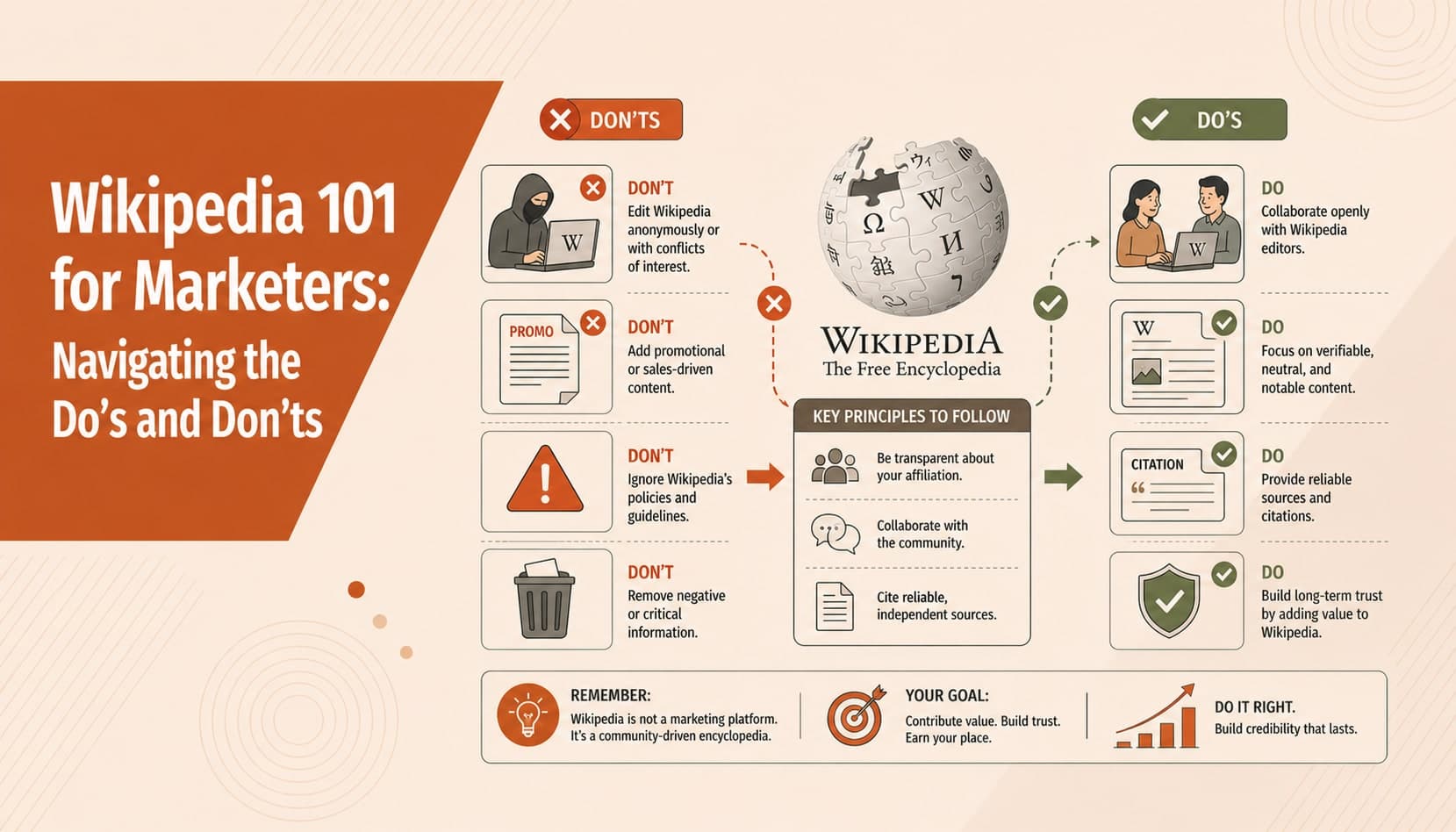
Brand marketers frequently struggle with Wikipedia management, questioning who should oversee updates and whether PR teams can handle edits. White-hat Wikipedia engagement rests on three pillars: disclosure, collaboration, and good faith.
White-hat vs. black-hat Wikipedia practices
Disclosure requires revealing your affiliation with the page subject. This legal requirement appears in Wikipedia's Terms of Use and the FTC's Disclosures Guide, prohibiting marketers from posing as impartial public members. Collaboration means proposing edits to impartial editors rather than making unilateral changes. Good faith requires neutrality and positive contributions — Wikipedia's arbitration committee expects PR professionals to prioritize objectivity over advocacy.
Three steps to proper Wikipedia engagement
- Content — understand Wikipedia's citation standards, research sources thoroughly, and summarize them objectively. Wikipedia favors M&A activity but disfavors certifications, partnerships, and client listings unless citations are exceptionally strong.
- Consulting — collect internal feedback to distinguish legitimate corrections from promotional content that violates Wikipedia policies.
- Engagement — propose content to editors, incorporate feedback, and follow up. This requires patience given Wikipedia's volunteer-driven timeline.
Top Wikipedia content policies every marketer should know
- "Verification Not Truth" — Wikipedia reflects credible sources rather than determining factual accuracy. The focus should be on what citations demonstrate, not ultimate truth.
- "Due and Undue Weight" — citations alone don't guarantee inclusion. Wikipedia summarizes information without comprehensively listing everything citable. Press mentions don't justify inclusion.
- "Not a Resource for Conducting Business" — prohibits directory-style information including executive listings, products, partnerships, and office locations as promotional and non-encyclopedic.
Common misconceptions about Wikipedia
Marketers cannot use shared accounts like "PR at [Company]," but individual accounts with personal names are acceptable. Building credibility through unrelated edits is deceptive and violates Wikipedia's spirit. And hiring intermediaries doesn't create a loophole — both FTC regulations and Wikipedia's Terms of Use hold companies responsible for disclosing paid editors, regardless of intermediaries.
Consequences of unethical editing
- A "badge of shame" displayed on the page
- Addition of negative content counterbalancing promotional material
- Contentious relationships with Wikipedia editors
- Significant content removals eliminating bias
Companies should prioritize vendors from Wikipedia's official "Disclosed paid editing" list. These firms meet two criteria: Wikipedia knows their platform activity, and they haven't been blocked. This list contains fewer than ten white-hat firms, providing crucial vetting that independent research couldn't match.