
Creative professionals lead organizations' most engaging marketing work — from campaign concepts to visuals. However, generating these ideas demands collaboration rather than solo effort, making brainstorms essential to the creative process.
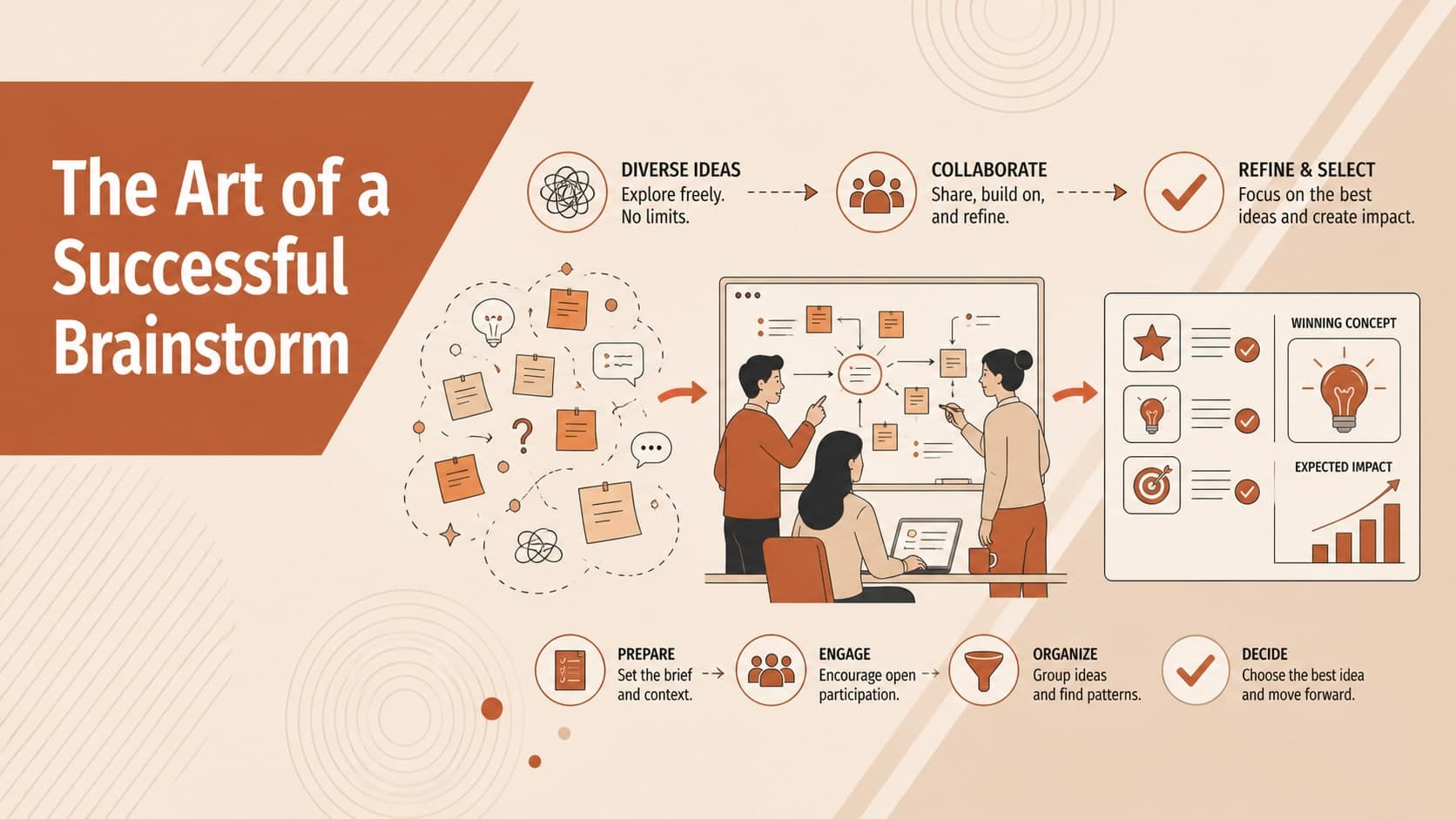
Brainstorms serve to "pool our creative minds and unlock our most innovative ideas," yet they frequently disappoint when participants misunderstand their purpose. Successful sessions balance exploration of numerous concepts with selection of outcome-driven winners.
An important clarification: brainstorms shouldn't start from zero. Arriving unprepared undermines the session's value. Creativity emerges through deliberate, structured processes rather than spontaneous inspiration.
Before the brainstorm
Teams must first establish alignment on a creative brief detailing goals, key messages, target audiences, and tone preferences. All participants should receive this document well in advance.
Every attendee should independently develop at least one or two discussion-ready ideas beforehand. These need not be fully polished — they should merely "start a conversation." Individual preparation maximizes meeting efficiency and participant engagement.
For those struggling with initial ideation:
- Start with the obvious: Identify industry trends, word associations, and image patterns competitors use. These obvious directions help surface more refined concepts.
- Seek inspiration everywhere: Explore work across industries and media types. Strong ideas emerge from diverse sources — one campaign connected cloud spend management and old-school noir detective films.
- Do a competitive analysis: Understanding competitor messaging prevents duplicative concepts while sparking original directions.
At this preparatory stage, ideas need not be perfect. Showing up with something concrete matters most.
During the brainstorm
Create an environment where all participants feel comfortable contributing. Since sharing ideas feels vulnerable, leaders should "encourage risks, random thoughts and stupid ideas (which often lead to smart ones)."
As leading concepts emerge, evaluate their alignment with original goals and key messages. Determine whether ideas should scale into full campaigns or serve as singular executions.
Once the team gravitates toward several promising directions, conclude the session. The group can then rest and refine selected concepts.
After the brainstorm
Someone must translate shared ideas into concrete deliverables. Clarify ownership of next steps and accountability enforcement. Creative directors typically oversee this phase, determining when ideation concludes.
Following the formula — clear briefs, outcome focus, and experimental freedom — positions teams for breakthrough creative work.