
A fundamental tension exists in B2B marketing: while C-suite executives increasingly expect measurable business impact, most marketing teams remain focused on channels rather than outcomes. Research indicates that 87% of senior marketers prioritize business objectives more than five years prior, yet only 27% initiate planning by identifying desired outcomes. Instead, teams select channels first and attempt retroactively linking traditional metrics to business results.
Outcomes first, then channels
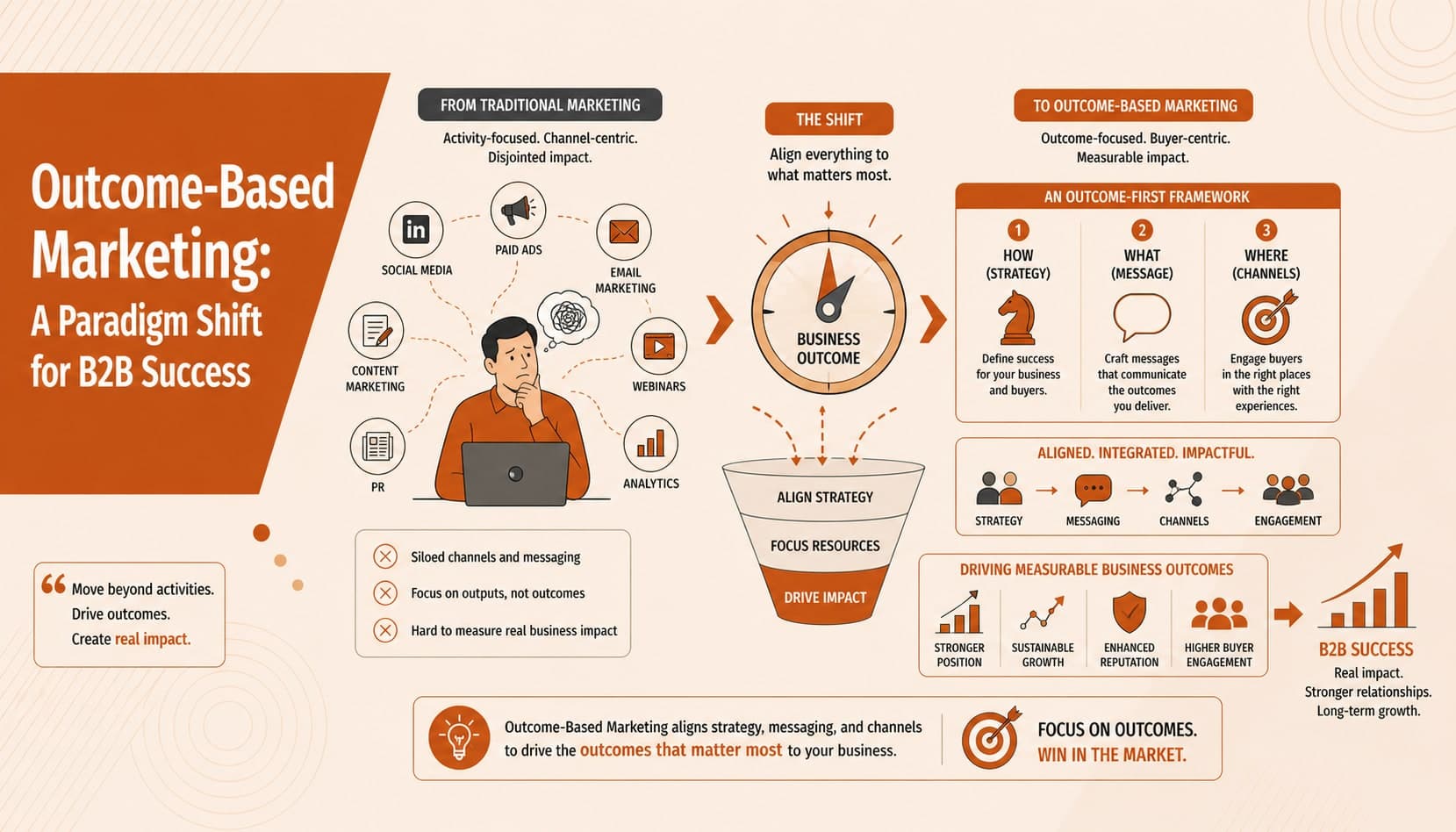
Progressive marketers increasingly approach Kubnal Bridge with business challenges — such as category creation or market penetration — without predetermined channel preferences. These outcome-centric conversations prompted the company to develop Outcome-based Marketing (OBM). The OBM framework begins with a guiding question: "How might we [outcome] among [audience]?" Rather than optimizing channel-specific KPIs, OBM allows overarching business goals to direct strategy.
What outcomes are marketers chasing?
Research reveals significant misalignment: over half (58%) of marketing decision-makers struggle understanding which business outcomes their C-suite expects from marketing efforts. The OBM approach categorizes outcomes into four primary types:
- Position — establish market presence and strengthen competitive differentiation
- Growth — advance organizational financial objectives and expand growth possibilities
- Reputation — control brand narrative and reinforce organizational identity
- Engagement — cultivate audience confidence and lead industry discourse across platforms
The three pillars of OBM
After establishing the target outcome and audience, Kubnal Bridge employs its complete marketing toolkit around three foundational pillars:
- How — developing insights-driven strategy incorporating specific tactics, channels, and creative messaging, all connected to desired outcomes
- What — conveying distinctive brand narratives through research-validated messaging and impactful creative designed for target audiences
- Where — selecting optimal B2B channels spanning earned, owned, and paid media to engage key decision-makers through tailored activation approaches
While channels remain important, the marketing mix should adapt fluidly based on North Star objectives rather than perpetuating established approaches. OBM prioritizes this adaptability, ensuring every investment connects back to measurable business outcomes.