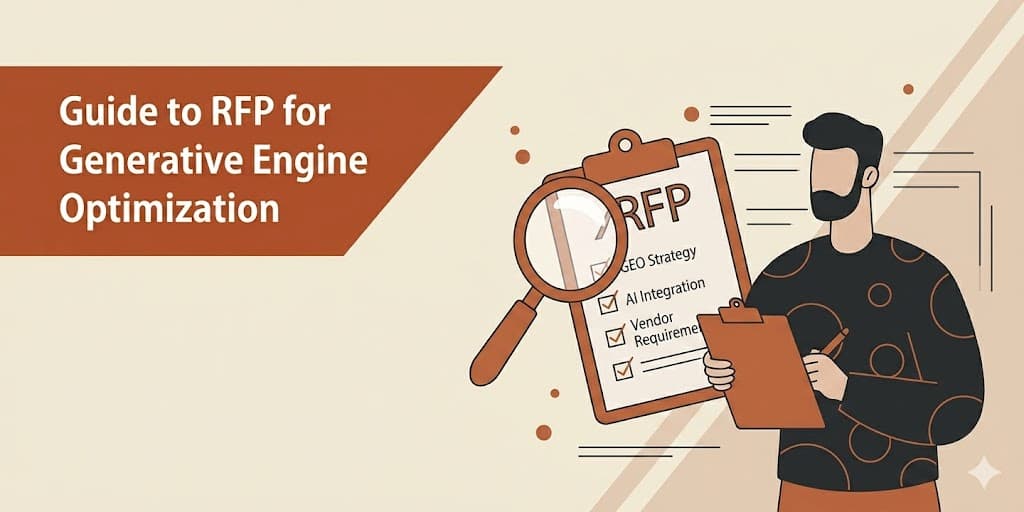
As AI-driven search reshapes the B2B buyer journey, large language models are fundamentally changing how B2B audiences discover, evaluate and select vendors. Zero-click searches, AI-synthesized answers and LLM-generated recommendations are no longer fringe buyer behavior. According to a report from Demand Gen Report, nearly two-thirds of marketers now use GenAI as much or more than traditional search when researching vendors. This shift has elevated Generative Engine Optimization (GEO) from an experimental initiative to a top strategic priority.
Key Takeaways
- A strong GEO RFP sets the foundation — clear goals, scope and evaluation criteria help agency partners respond with informed strategies that support your desired business outcomes
- GEO spans your entire marketing strategy — effective GEO strategies don't live in a silo; they touch PR, content, social, SEO and paid media
- The right partner scales strategy and execution — look for agencies that combine foundational research with adaptive, long-term GEO strategies and prioritize educating your internal team
What to Include in Your GEO RFP
Essential Company Information
Begin your RFP with foundational context that enables teams to understand your business landscape and positioning:
- Company background and mission
- Product and service information (include product hierarchy if helpful)
- Competitor set and landscape
- Brand positioning and differentiators
- Target audience (even if high-level to start)
A Specific and Clear Project Scope
Because GEO spans multiple facets of a marketing strategy, it's critical to clearly define your needs, outlining where you expect specific expertise and where you welcome open-ended recommendations. Define specific channels, key deliverables (i.e., GEO audit), KPIs, reporting expectations and other needs you and your team have already identified.
Clearly Defined GEO Objectives
GEO is still an emerging discipline, and vague or overly broad goals can make it difficult for agencies to propose impactful, business-aligned strategies. Your objectives should balance both short-term and long-term value. Consider including goals like:
- Increase brand visibility in LLM-generated responses for core branded and unbranded queries
- Enable internal teams with GEO education and tools, such as best practices documentation or workshops
- Establish and maintain AI-informed content that aligns with high-priority topics and keywords
Expectations and Evaluation Criteria
- Internal team structure — include an overview of internal key stakeholders and their roles
- Desired team experience — size of team, specific roles, years of experience
- Request for work samples — case studies spanning GEO, SEO, AI strategy and your industry
- Budget — even a rough range helps avoid wasted effort on both sides
- Timelines — include due dates for intent to bid, proposal submissions, presentations and projected program start
How a B2B Agency Should Help You Reach Your GEO Goals
Strategy + Foundational Buildout
A strong GEO engagement begins with a comprehensive baseline assessment and strategic roadmap. Key elements include a technical audit, content audit, competitive gap analysis, SERP and LLM visibility review and benchmarking. Building on foundational research, your agency should be equipped to develop a strategic roadmap for short- and long-term wins, identifying quick wins and providing prioritized content topics.
GEO Best Practices + Education
With AI-driven search changing rapidly, agencies must act as educators, not just executors. Look for partners who offer custom training sessions, education on why GenAI matters to your brand and industry, and workshops explaining core GEO principles and technical tactics.
Ongoing Program for Long-Term Growth
Like most digital marketing initiatives, GEO is not something you can "set and forget." Your GEO strategy needs to constantly evolve alongside the latest changes to GenAI engines. Prioritize agencies that outline a continuous optimization framework including combined SEO + GEO efforts, content refreshes, prompt and keyword evolution, and performance reporting on a regular basis.
Ensure They See the Bigger Picture
GEO is not a siloed SEO function. It touches every digital channel that influences AI-generated responses. Look for agencies that understand how GEO intersects with content marketing, PR, social media and paid media.