In today's crowded Software as a Service (SaaS) landscape, innovation alone isn't enough. Buyers face an overwhelming number of options and expect immediate clarity on how a solution meets their needs. To stand out, B2B software brands must lead with relevance, offer genuine value and create campaigns that produce measurable results.
Key Takeaways
- Strategic marketing is essential for SaaS growth — modern buyers face overwhelming choices, and only brands that prioritize marketing as a core business function will stand out and sustain demand
- Audience insight drives effective execution — deep understanding of buyer roles, industries and challenges ensures campaigns deliver relevant content that guides prospects through long sales cycles
- Integrated, full-funnel strategies create stronger impact — aligning content, paid and organic efforts across the buyer journey builds brand equity and accelerates conversions
- Trust and credibility power long-term success — consistent value delivery, thought leadership and customer advocacy establish buyer confidence that drives retention and recurring revenue
Why Strategic SaaS Marketing Can't Be an Afterthought
SaaS companies operate in a market where new competitors emerge constantly, and buyers face more choices than ever before. Without a deliberate, well-planned approach to marketing, even the most innovative software solutions risk being overlooked. Modern buyers are overwhelmed with choices and rely on digital research to narrow options. Strong B2B software marketing helps you stand out by simplifying the buying journey with clear messaging and educational content.
The Core Drivers of SaaS Marketing Success
- Strategy must guide every channel execution
- Deep audience knowledge fuels targeted campaigns
- Content and education drive trust at scale
- Omnichannel consistency reinforces brand equity
- Data and feedback loops should inform iteration
- Differentiation is rooted in brand positioning
- Thought leadership converts awareness into credibility
- Success requires alignment between marketing and product
8 Practical Approaches to Strengthen Your SaaS Marketing
1. Use Innovative Campaigns to Gain Share of Voice
Breaking through the crowded SaaS market requires creativity that goes beyond product demos and feature lists. Campaigns that spark curiosity and tell a bigger brand story have the power to capture attention, build trust and spark conversations that influence buying decisions.
2. Build FAQ-Driven Content Clusters Around Real SaaS Buyer Needs
Today's SaaS buyers turn to search engines (including AI-driven search tools) to educate themselves long before speaking with sales. Organizing pillar content and supporting pages around common buyer questions creates a structured, intuitive path through the decision journey. When tied to GEO strategies, clusters can surface your content at the exact moment prospects are exploring solutions.
3. Treat Email as a Personalized SaaS Buyer Journey, Not a Sales Pitch
Email remains one of the most effective channels for SaaS engagement. The most successful programs treat email as an extension of the buyer journey, using personalized workflows, adaptive content and segmentation to deliver the right message at the right time.
4. Launch Paid Search Campaigns Focused on Intent-Heavy SaaS Keywords
SaaS buyers turn to search engines when actively evaluating solutions. Focusing on keywords that signal readiness to buy ensures ad spend reaches prospects already close to making a decision. Strong keyword research, ongoing bid optimization and thoughtful ad copy help maximize ROI.
5. Pair Paid Social With Retargeting to Re-Engage SaaS Prospects
In B2B SaaS, buyers rarely convert after a single interaction. Paid social campaigns create visibility with fresh audiences, while retargeting re-engages prospects who have already shown interest but haven't yet taken the next step. Together, these tactics create a dynamic campaign that revives stalled opportunities.
6. Create a Balanced, Value-Added Social Strategy
A strong social presence isn't built solely on promotion. SaaS companies earn influence with content that delivers consistent value — whether industry insights, customer stories or perspectives on emerging trends. Organic engagement fosters community and credibility, while selective paid promotion ensures messages reach beyond your immediate network.
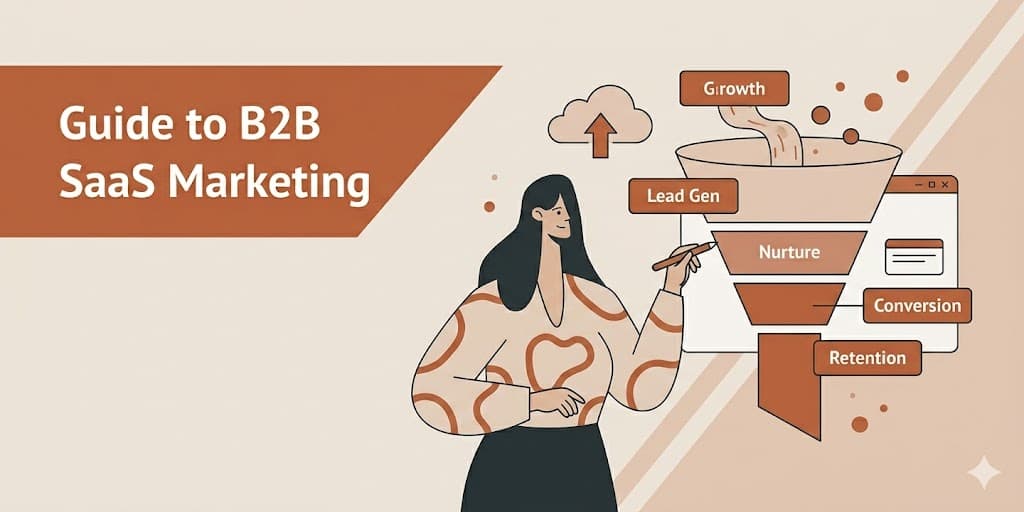
7. Unify Tactics Into an Integrated, Full-Funnel Strategy
Marketing delivers the most value when channels and campaigns operate in concert toward a shared objective. A full-funnel strategy ties top-of-funnel awareness efforts to nurturing initiatives and conversion-focused programs, creating a unified experience for prospects at every stage. This eliminates silos and ensures momentum carries buyers smoothly from first touch to closed deal.
8. Target High-Value Accounts With Layered ABM Tactics
Account-based marketing (ABM) remains an effective growth strategy for SaaS companies. Layered tactics — from personalized outreach to tailored messaging and high-value content — ensure your brand captures the attention of decision-makers who influence buying committees. When executed consistently, ABM deepens engagement with priority accounts.
B2B Software Marketing in Action: Real-World Wins
Brand Transformation and SaaS Platform Launch for Miller Heiman Group
Miller Heiman Group partnered with Kubnal Bridge to reposition its brand during the launch of its first SaaS platform. The engagement focused on sharpening messaging and creative assets to reflect the company's evolution while ensuring the platform entered the market with credibility and impact, transforming brand perception and positioning Miller Heiman Group as a trusted leader in its category.
Bold Creative Highlights Expertise for SoftwareOne
SoftwareOne needed a way to stand apart in a highly competitive software landscape. Kubnal Bridge designed daring creative campaigns that showcased the company's expertise and positioned it as an innovator with a bold perspective, generating greater visibility and reinforcing its reputation with both new and existing audiences.