As generative tools like ChatGPT, Perplexity and Gemini curate and summarize information, they influence which brands earn visibility and trust long before users reach a website. Unlike traditional SEO, which focuses on optimizing for ranked results, GEO centers on how a brand is represented in AI-generated summaries and responses.
Key Takeaways
- GEO success metrics go beyond clicks and measure how brands appear, perform and build trust within AI-generated responses and chat experiences
- AI-driven engagement must connect to business outcomes by linking generative awareness to lead quality, pipeline growth and brand perception
- Measurement is evolving fast, requiring early GEO frameworks that combine analytics, SEO and AI insight tools while staying flexible as generative platforms mature
How Do GEO and SEO Metrics Differ?
Search Engine Optimization (SEO)
SEO builds the credibility and technical foundation that generative engines use to identify and prioritize trusted sources. Elements like earned media backlinks, structured data and on-page optimization strengthen a site's authority and relevance — signals that both search engines and AI systems consider when determining which content to surface.
Generative Engine Optimization (GEO)
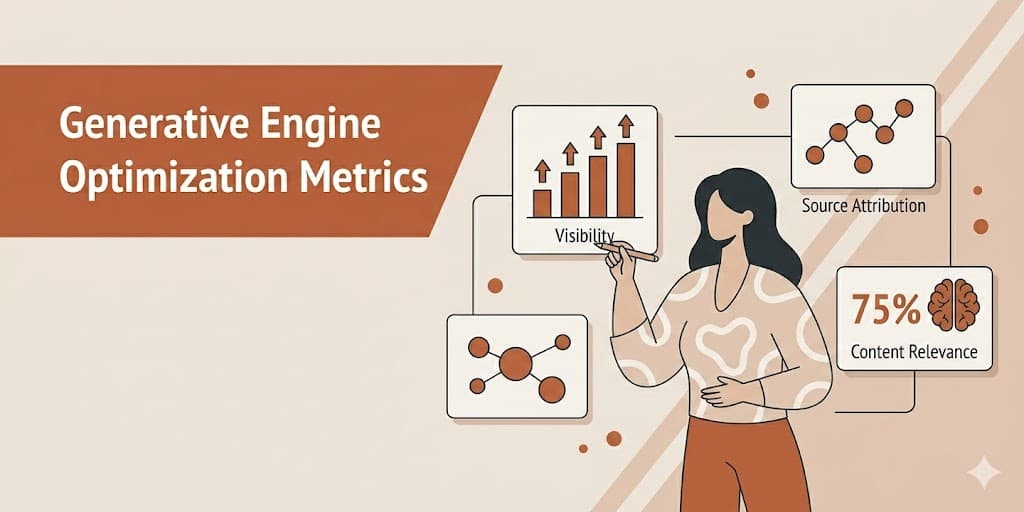
GEO measures a brand's presence in AI-generated results — the summaries, comparisons and recommendations produced by LLMs. It builds on traditional SEO by optimizing not just for search rankings, but for how content is surfaced, summarized and cited within generative answers. Strong SEO authority reinforces GEO visibility, while GEO insights reveal new ways to refine SEO content strategy.
The 7 Most Important GEO Metrics to Track
1. AI Referral Traffic (by AI Chatbot, With Conversions and Conversion Rate)
AI referral traffic measures how much engagement comes from generative AI chatbots like ChatGPT, Perplexity and Gemini. Tracking conversions and conversion rate by chatbot shows which platforms deliver meaningful visitors, not just curiosity clicks. When engagement and conversion rates stay high, it signals that users trust the content and GEO efforts are driving measurable impact.
2. Leads and Sales Pipeline Impact From AI Sources
Tracking leads, opportunities and pipeline influenced by AI platforms shows whether a brand's presence in generative search is producing real revenue potential. Collecting AI sources of leads and engagement in marketing automation platforms or CRM systems helps pinpoint which channels are driving conversions.
3. Web Engagement
When users arrive from generative platforms, their engagement shows how well content aligns with their intent. Metrics like engagement rate, session duration, page views per visit, and conversions on AI-referred pages reveal whether those visitors are finding relevant information once they land.
4. Brand Perception and Sentiment
The way AI systems interpret and represent a brand in prompt responses can accurately or inaccurately portray the brand. Sentiment analysis helps marketers understand whether generative platforms portray the brand positively, neutrally or negatively, allowing teams to uncover shifts in reputation before they impact visibility.
5. Visibility (Brand Mentions and Citations) in AI Responses
Brand citations capture specific instances where AI platforms link to a company as a source of information. Brand mentions occur when a company name appears in an AI response. Together, citations and mentions form the foundation of generative visibility, showing not just how often a brand appears, but how it's represented within AI-generated results.
6. Share of Voice in AI Responses
Share of Voice (SOV) captures how prominently a brand appears across AI-generated results compared to competitors. SOV quantifies this presence by analyzing the percentage of brand mentions and citations relative to others across AI platforms like ChatGPT, Perplexity and Gemini, along with visibility in Google's AI Overviews.
7. Content Crawling by AI Bots
Content crawling by AI bots determines if LLMs are accessing and learning from a site — a prerequisite for being cited or represented in generative results. Understanding whether and how content is surfaced by these platforms can reveal gaps in GEO strategy and help forecast future visibility.
How to Track Your Brand's GEO Success Metrics
Each of the following platforms offers unique insights that collectively shape a brand's generative visibility:
- Google Analytics 4 — segment AI referral traffic and track conversion behavior from generative platforms
- Semrush/Ahrefs — track keyword trends, backlinks and domain health to identify signals boosting visibility across both traditional and generative search
- peec.ai/Profound — GEO-specific intelligence showing where and how content appears within generative platforms
- Salesforce with marketing automation — connect visibility to revenue by tracking AI-sourced leads through the lead lifecycle and sales funnel
- Cloudflare Bot Analytics/GoAccess — detect AI crawler activity to gain early insight into how material is being integrated into model training