

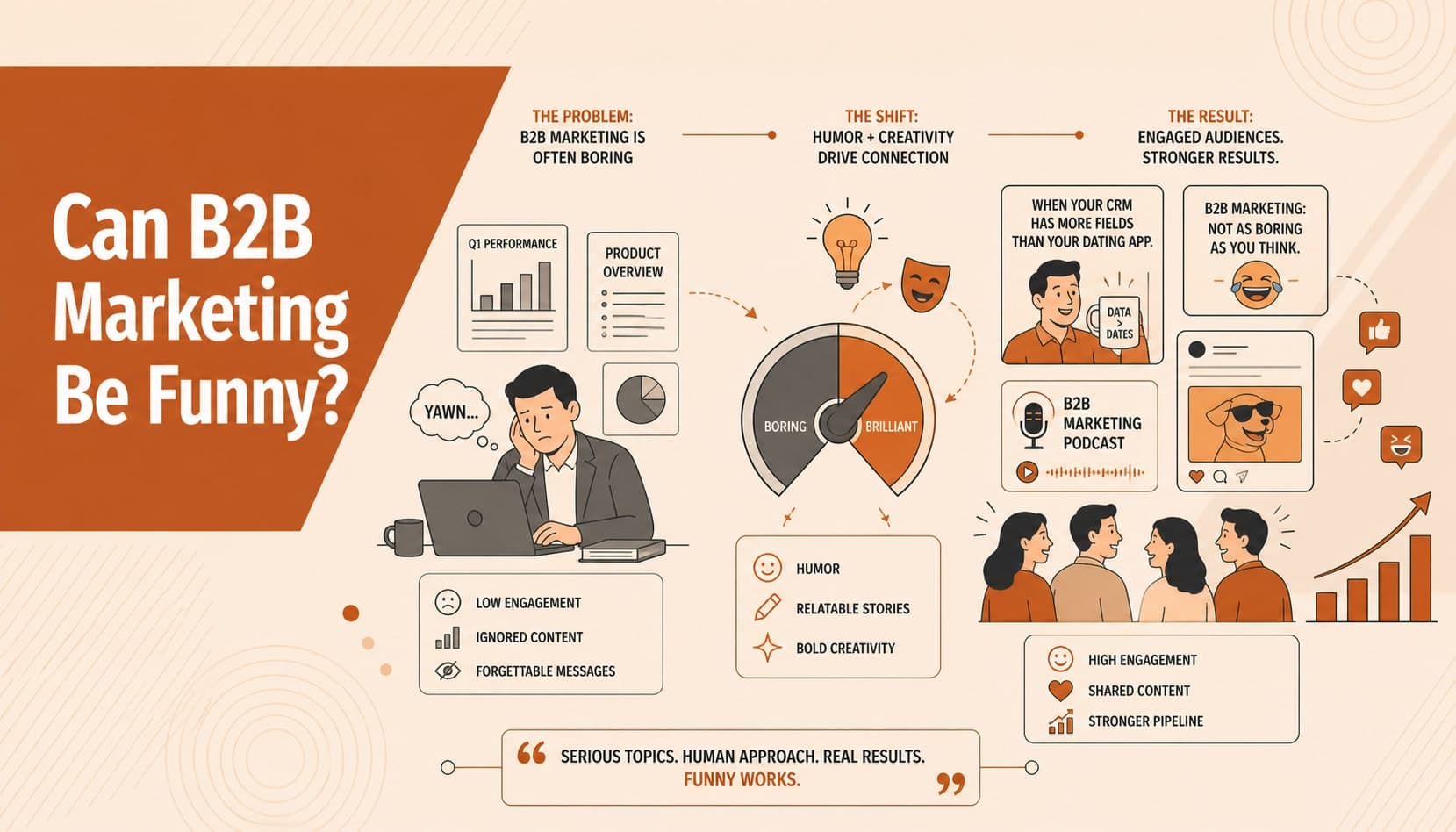
While humor dominates B2C advertising, B2B has traditionally remained formal. But modern business decision-makers now crave creative, engaging content that breaks from conventional templates. Research shows that creative ads make decision-makers 40% more likely to consider purchasing.
Why be funny in B2B?
Humor creates emotional connections and makes brands memorable. When executed strategically, funny content fosters shared experiences with audiences. However, success requires more than posting reaction GIFs — it demands an outcome-based marketing approach where business goals guide creative decisions.
Humor should serve specific objectives. Building affinity and brand recognition justify creative approaches, while announcing product updates or establishing credibility may require different tactics.
How to create content without the cringe
- Make it a natural evolution — introduce lightheartedness gradually. Brand voice functions like a dial that can adjust based on context, similar to how tone differs between formal meetings and casual settings.
- Start small — begin with inherently casual channels: social media, employee newsletters, or holiday videos. This foundation allows humor to feel authentic before broader campaign deployment.
- Know your audience — relatability drives comedy. Understanding audience pain points through persona research, social listening, and interviews enables meaningful connections.
- Stay in tune — effective marketing requires awareness of trends and pop culture. Brands should selectively participate only in trends that align with their messaging and audience interests.
- Embrace experimentation — B2B audiences respond to visual, digestible content like videos, animations, and GIFs. Business buyers are people first, and treating them as human audiences increases relatability.
The bottom line
Done correctly, humor drives engagement and conversation while supporting business objectives. Stagnant marketing presents greater risk than creative experimentation. Brands should leverage their team's industry knowledge and shared experiences to connect authentically with audiences through creative content that achieves measurable business outcomes.